Patient Engagement and HIPAA: The Ultimate Compliance Guide


Patient engagement and patient privacy go hand in hand. All successful healthcare practices know this.
Healthcare practices must adhere to the strict guidelines set by The Health Insurance Portability and Accountability Act (HIPAA). Under the HIPAA guidelines, protected health information (PHI) must be kept confidential.
In order to communicate effectively, healthcare providers need the patient’s express consent. This is also an effective patient engagement strategy, as it builds trust and encourages patients to open up to their healthcare providers, knowing that the information they provide is legally protected.
When communication takes place online, there are certain challenges and threats that healthcare practices face. One of them is providing a secure communication platform that safeguards patients’ data and your practice from a potential data breach.
A HIPAA-compliant messaging platform uses encryption to ensure secure communication between patients and practices. It also obtains consent and prevents unauthorized access to patient healthcare information.
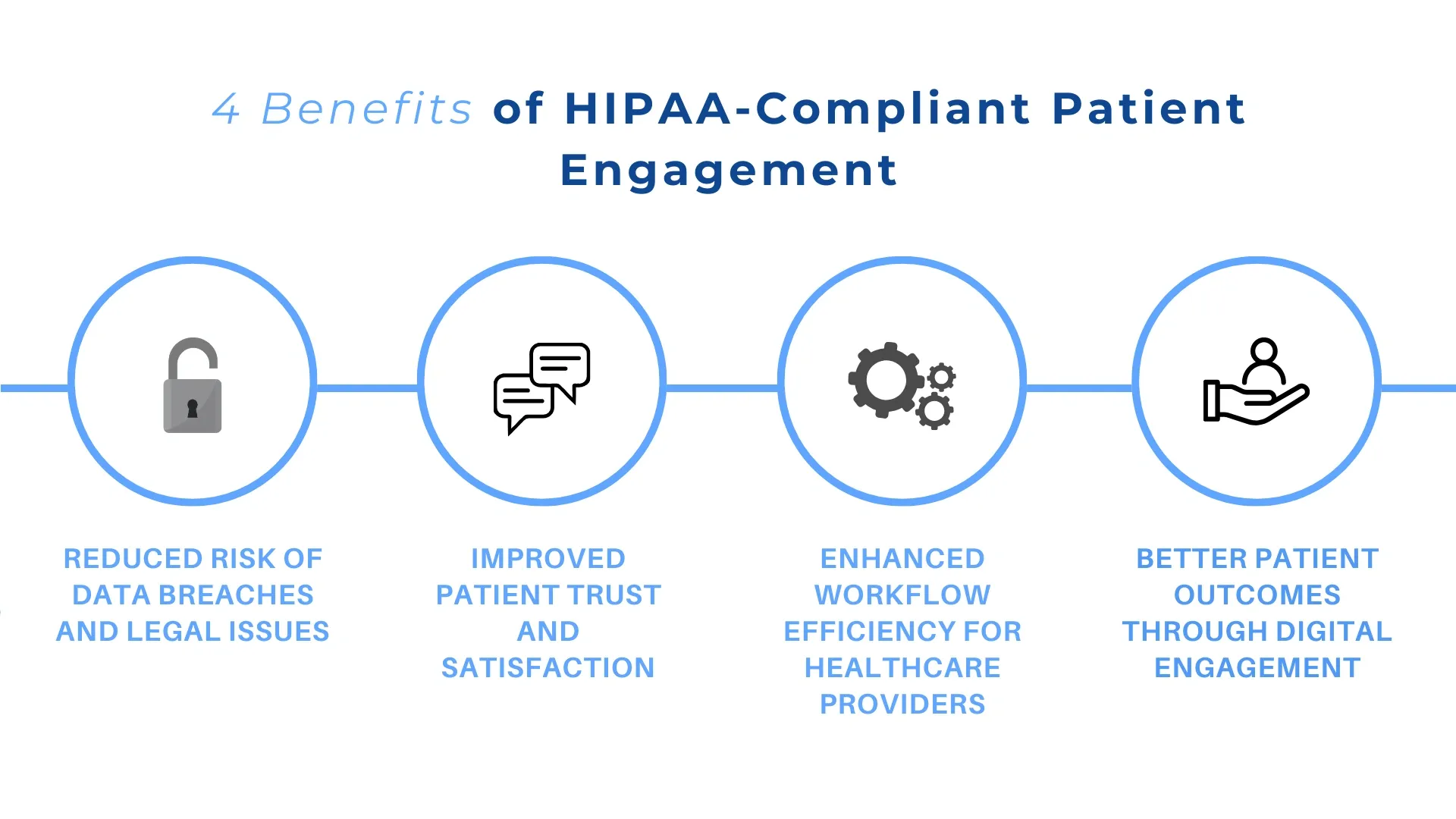
Here are a few of the benefits of using HIPAA-compliant software for patient engagement.
Building trust with patients requires consistent communication, as well as the ability to handle patient data without compromising privacy. This is why using a patient engagement software that is HIPAA-compliant is so important.
When patients know that their healthcare provider uses a HIPAA-compliant software, they feel more comfortable reaching out. This fosters patient loyalty and patient retention.
Data breaches compromise your patients’ data which can lead to financial and reputational repercussions. Using a HIPAA-compliant software minimizes the risk of data breaches through encrypted messaging.
Automated reminders and text messaging platforms help reduce administrative workload, streamline practice operations, and improve staff’s productivity.
Healthcare practices can benefit from providing patients with online appointment scheduling, and secure two-way messaging streamlines practice operations and enhances patient engagement.
Communication through digital channels reduces no-shows, and empowers patients to take a more active role in their healthcare journey.
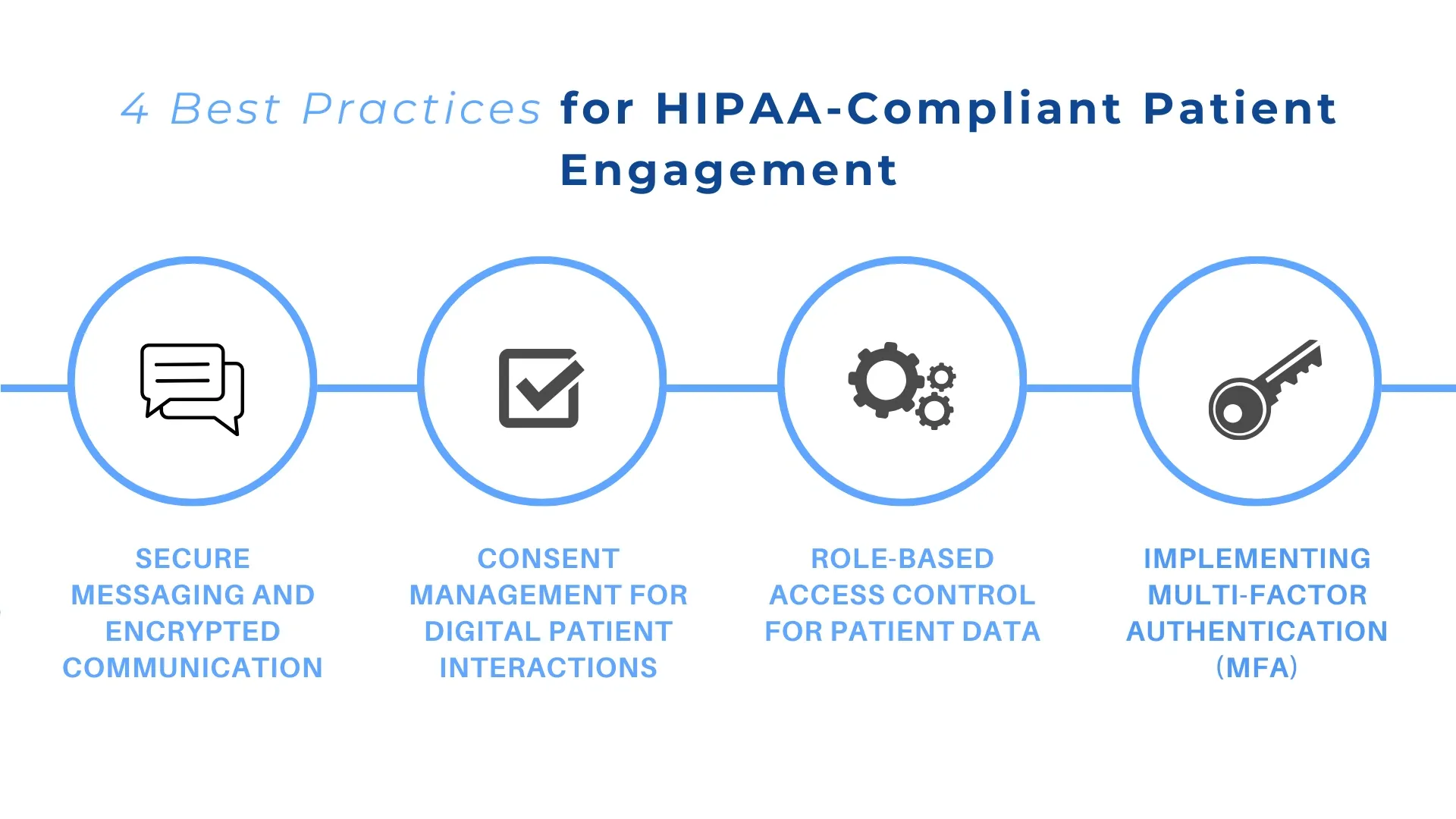
Here are some effective strategies for HIPAA-compliant patient engagement that you can use to protect patient privacy and build trust between patients and practices.
Secure Messaging and Encrypted Communication Using a secure messaging platform that meets HIPAA compliance guidelines is a great way to protect patients’ privacy while actively engaging with your patients. Whether it is answering patient queries, or sending appointment reminders, an encrypted messaging platform makes the entire process more secure.
Consent Management for Digital Patient Interactions Obtaining written consent from patients before you send them any messages ensures HIPAA compliance and protects your practice from legal repercussions. Using a digital platform helps you maintain a record of patient consent and tracks updates.
Implementing Multi-Factor Authentication (MFA) It is important to add a two-step authentication process, whether it is through password, verification code or biometric identification. This prevents unauthorized access to sensitive medical records by adding an extra layer of security to patient portals.
Role-Based Access Control for Patient Data Using HIPAA-compliant software prevents authorized access to patient data, making patient interactions as secure and efficient as possible. This is called Role-Based Access Control (RBAC) which ensures that only relevant people can access a patient’s personal information, especially Protected Health Information (PHI).
DemandHub is a HIPAA-compliant software that is designed to help healthcare practices connect with patients while protecting patients’ privacy.
Patient engagement is the secret ingredient to running a thriving practice, which is why DemandHub offers end-to-end encrypted messaging. This way patients can interact with their healthcare providers openly and without reservation leading to better healthcare outcomes.
Want to learn more about DemandHub? Book a free demo today.
HIPAA compliant patient engagement refers to healthcare practices adhering to guidelines set by The Health Insurance Portability and Accountability Act (HIPAA) while interacting with patients. This ensures that patients’ privacy is protected by using end-to-end encryption and obtaining explicit patient consent.
HIPAA compliance is essential for patient communication because it allows healthcare practices to protect patient privacy, and in doing so build trust and foster loyalty. HIPAA violations can also have severe financial and reputational consequences.
Healthcare providers can securely message patients by using a HIPAA-compliant messaging platform such as DemandHub. Practices must also obtain consent from patients at the registration stage to avoid HIPAA violations.
Online scheduling and patient portals help practices streamline operations while also enhancing patient engagement in the process. This is also why protecting patients’ privacy is so important when using digital tools to collect and access patients’ data.
Here are some of the risks of non-HIPAA compliant patient engagement:
Potential data breaches that may lead to patients’ sensitive data exposed
Hefty fines and legal penalties resulting from non-compliance
Reputational damage and loss of trust resulting from mishandling patient data
Loss of revenue and business opportunities
Here are some ways AI can improve HIPAA-compliant patient interactions:
Automating appointment reminders, and follow-ups while protecting patient data
Customizing reminders to add a personal touch
AI-driven chatbots can improve review reminders while maintaining security.
Patient engagement and patient privacy go hand in hand. All successful healthcare practices know this.
Healthcare practices must adhere to the strict guidelines set by The Health Insurance Portability and Accountability Act (HIPAA). Under the HIPAA guidelines, protected health information (PHI) must be kept confidential.
In order to communicate effectively, healthcare providers need the patient’s express consent. This is also an effective patient engagement strategy, as it builds trust and encourages patients to open up to their healthcare providers, knowing that the information they provide is legally protected.
When communication takes place online, there are certain challenges and threats that healthcare practices face. One of them is providing a secure communication platform that safeguards patients’ data and your practice from a potential data breach.
A HIPAA-compliant messaging platform uses encryption to ensure secure communication between patients and practices. It also obtains consent and prevents unauthorized access to patient healthcare information.
Here are a few of the benefits of using HIPAA-compliant software for patient engagement.
Building trust with patients requires consistent communication, as well as the ability to handle patient data without compromising privacy. This is why using a patient engagement software that is HIPAA-compliant is so important.
When patients know that their healthcare provider uses a HIPAA-compliant software, they feel more comfortable reaching out. This fosters patient loyalty and patient retention.
Data breaches compromise your patients’ data which can lead to financial and reputational repercussions. Using a HIPAA-compliant software minimizes the risk of data breaches through encrypted messaging.
Automated reminders and text messaging platforms help reduce administrative workload, streamline practice operations, and improve staff’s productivity.
Healthcare practices can benefit from providing patients with online appointment scheduling, and secure two-way messaging streamlines practice operations and enhances patient engagement.
Communication through digital channels reduces no-shows, and empowers patients to take a more active role in their healthcare journey.
Here are some effective strategies for HIPAA-compliant patient engagement that you can use to protect patient privacy and build trust between patients and practices.
Secure Messaging and Encrypted Communication Using a secure messaging platform that meets HIPAA compliance guidelines is a great way to protect patients’ privacy while actively engaging with your patients. Whether it is answering patient queries, or sending appointment reminders, an encrypted messaging platform makes the entire process more secure.
Consent Management for Digital Patient Interactions Obtaining written consent from patients before you send them any messages ensures HIPAA compliance and protects your practice from legal repercussions. Using a digital platform helps you maintain a record of patient consent and tracks updates.
Implementing Multi-Factor Authentication (MFA) It is important to add a two-step authentication process, whether it is through password, verification code or biometric identification. This prevents unauthorized access to sensitive medical records by adding an extra layer of security to patient portals.
Role-Based Access Control for Patient Data Using HIPAA-compliant software prevents authorized access to patient data, making patient interactions as secure and efficient as possible. This is called Role-Based Access Control (RBAC) which ensures that only relevant people can access a patient’s personal information, especially Protected Health Information (PHI).
DemandHub is a HIPAA-compliant software that is designed to help healthcare practices connect with patients while protecting patients’ privacy.
Patient engagement is the secret ingredient to running a thriving practice, which is why DemandHub offers end-to-end encrypted messaging. This way patients can interact with their healthcare providers openly and without reservation leading to better healthcare outcomes.
Want to learn more about DemandHub? Book a free demo today.
HIPAA compliant patient engagement refers to healthcare practices adhering to guidelines set by The Health Insurance Portability and Accountability Act (HIPAA) while interacting with patients. This ensures that patients’ privacy is protected by using end-to-end encryption and obtaining explicit patient consent.
HIPAA compliance is essential for patient communication because it allows healthcare practices to protect patient privacy, and in doing so build trust and foster loyalty. HIPAA violations can also have severe financial and reputational consequences.
Healthcare providers can securely message patients by using a HIPAA-compliant messaging platform such as DemandHub. Practices must also obtain consent from patients at the registration stage to avoid HIPAA violations.
Online scheduling and patient portals help practices streamline operations while also enhancing patient engagement in the process. This is also why protecting patients’ privacy is so important when using digital tools to collect and access patients’ data.
Here are some of the risks of non-HIPAA compliant patient engagement:
Potential data breaches that may lead to patients’ sensitive data exposed
Hefty fines and legal penalties resulting from non-compliance
Reputational damage and loss of trust resulting from mishandling patient data
Loss of revenue and business opportunities
Here are some ways AI can improve HIPAA-compliant patient interactions:
Automating appointment reminders, and follow-ups while protecting patient data
Customizing reminders to add a personal touch
AI-driven chatbots can improve review reminders while maintaining security.