Are you looking to switch from Doctible or explore other options? If you like Doctible’s simplicity but feel boxed in by limited automations, lighter analytics, or integrations that don’t go deep enough, you are not alone. Many clinics, dentists, chiropractors and other practices start with Doctible for reminders and reviews. Then outgrow it as they scale locations, expand services or need richer workflow automation.
According to a study published in Press Ganey, patients who experience delays, poor communication, or difficulty reaching their provider are significantly more likely to switch providers, with communication-related issues ranking among the top drivers of patient dissatisfaction and leakage across healthcare systems.
In this article, I will break down the top 9 Doctible alternatives, from AI-powered messaging platforms to enterprise-grade patient engagement suites. For each alternative, you will have the intro, features pros and cons, pricing and customer reviews.
Doctible is a patient engagement platform used by dental, chiropractic, vision and other healthcare practices. It focuses on automated reminders, two-way texting, digital intake, recall/reactivation, online scheduling and review generation. The everyday tools that reduce phone time and help keep the schedule full. It is approachable for small teams and gets you quick wins in confirmations and reviews without heavy onboarding.
| Pros: | Cons: |
|---|---|
| Easy for front desk teams: Simple UI; staff ramps up fast | Integrations depth: Fewer or shallower EHR/PM integrations vs. enterprise platforms |
| Quick, visible wins: Reminders, recalls, and reviews deliver results early | Automation ceiling: Advanced AI workflows and branching logic are limited |
| Good value for SMBs: Solid feature coverage without enterprise bloat | Reporting/analytics: Can feel basic for multi-location leaders |
| Lower lift to launch: Lighter onboarding than many all-in-one suites | Scalability: As you grow, you may need broader tools (phones, payments, websites, call intelligence) |
While reading so many customer reviews on sites like G2, Capterra, and TrustPilot, I have gathered top reviews about Doctible.
We would love to see full integration with NextGen. While the current features are incredibly helpful, a deeper integration, especially one that pulls demographic and medical info directly into the EHR, would make the workflow even more seamless. - Capterra (source)
The Daily Review needs improving. It doesn’t remove the patients who didn’t show up to their appointment, so careful attention needs to be paid when reviewing the list so as not to send that patient a review request. - G2 (source)
Doesn’t integrate with EMR, making for more steps for my staff. Also, they rope you into a self-renewing contract for $300/mo. Not worth it. - Capterra (source)
A lot of manual work - there is not much automation available - G2 (source)
Please note that the review sites update constantly. Feel free to cross-check recency and relevance for your specialty and tech stack.
I was reading multiple reviews of users who have used Doctible previously or considered using it. Here are the most common reasons that I found:
What it does:
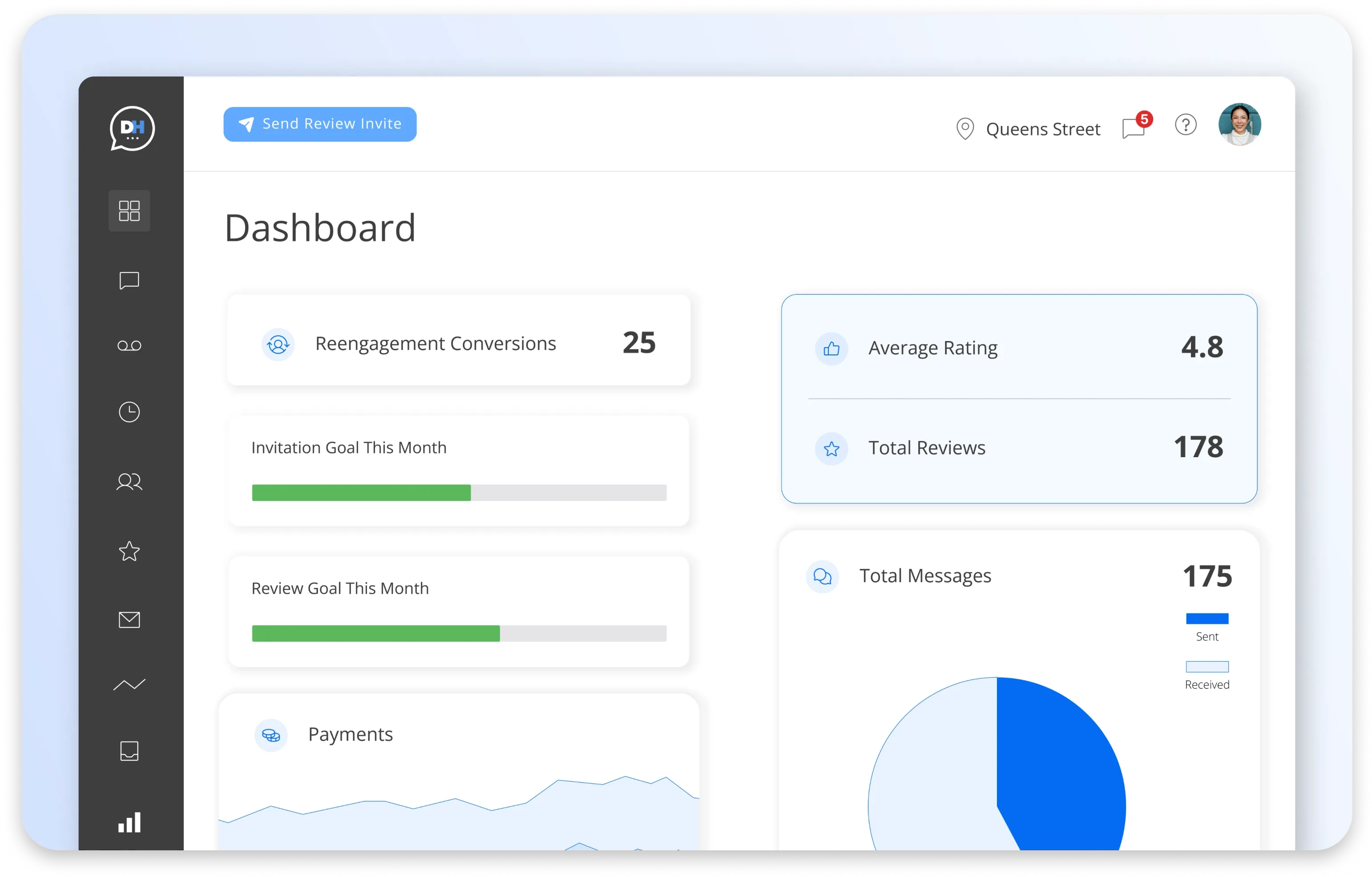
DemandHub is an AI-powered patient engagement and growth platform that unifies SMS, Web Chat, Google, Facebook, Instagram and email into one inbox. It automates review requests, follow-ups, recalls, scheduling, and text-to-pay so your front desk spends less time chasing and more time serving patients.
Best for:
Small to mid-sized practices that want quick wins in reviews, response time, and reactivation without complex setup.
Key features:
Unified inbox (SMS, Web Chat, Google, FB, IG, email)
AI Re-engagement and automated follow-ups
Automated review requests (text & QR)
Online scheduling and waitlist
Text-to-pay and estimates
Lead Manager and Team Chat
Insights and benchmarking
| Pros: | Cons: |
|---|---|
| Very fast to implement; intuitive for front desk | EHR/PM integrations list is still growing |
| Strong review lift and lead capture from web chat-to-SMS | Best fit for SMB and mid-sized groups (not a full EHR suite) |
| Great ROI for SMB clinics; friendly support team | |
| AI automations reduce manual follow-up |
Pricing: $59/month, SMB-friendly plans that typically start around entry-level pricing with add-ons as needed.
REAL Customer Reviews:
Here is what people say about DemandHub.
“We love that the chatbot converts to text messages so our clients do not need to stay on our website in order to chat or book an appointment with us.” - Capterra (source)
“Keep communication with the patients it’s super easy and allows you to speed the process any time a quick information needs to be shared with them.” - G2 (source)
What it does:
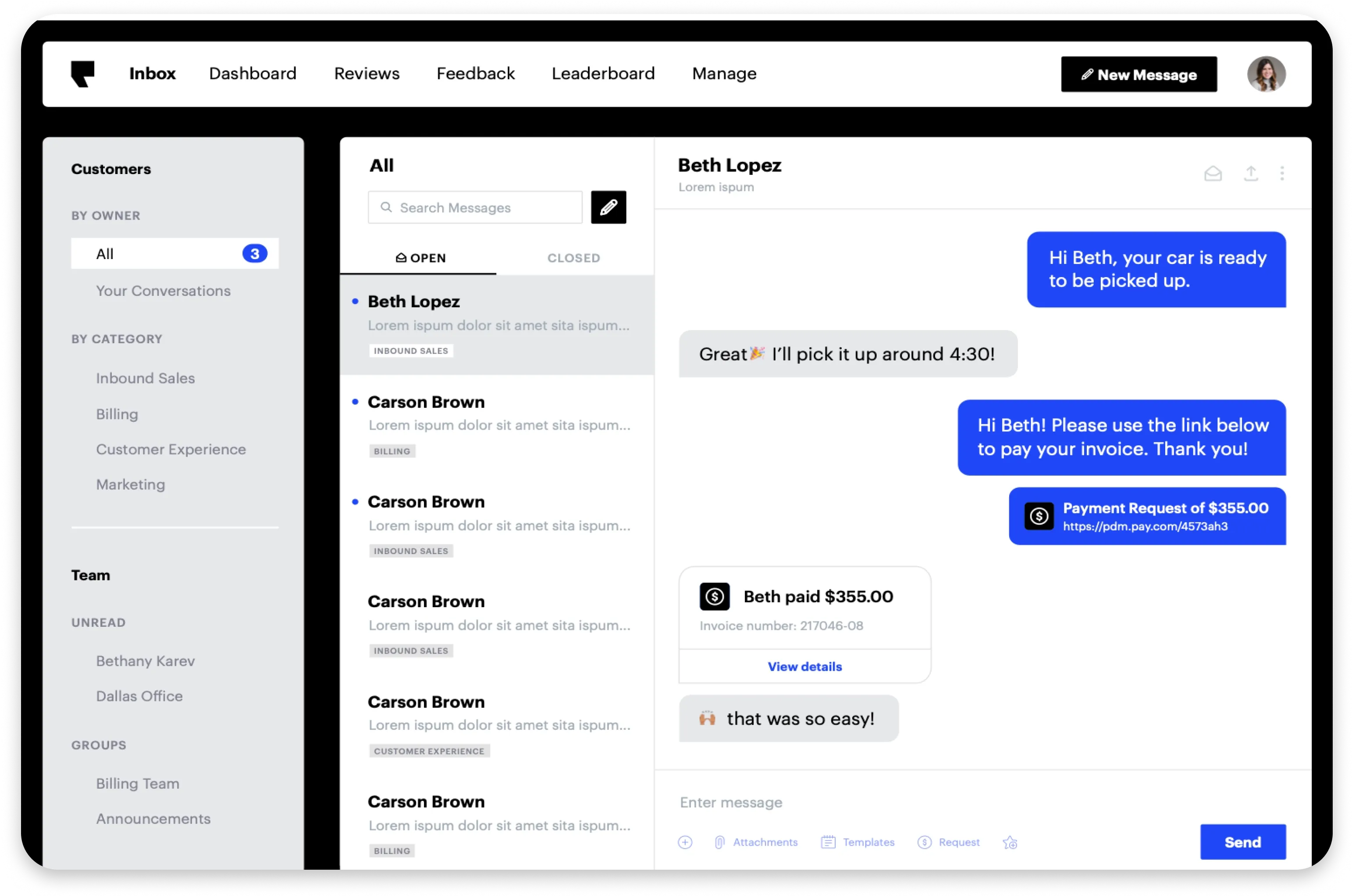
Podium focuses on reputation growth and revenue via messaging. It makes it easy to collect reviews, text with patients, capture leads from web chat and get paid with text-to-pay. All of these boosts local SEO and conversions.
Best for:
Multi-location groups and clinics where review velocity and text-to-pay are top priorities.
Key features:
SMS review requests and automations
Unified inbox + web chat lead capture
Text-to-pay and invoicing
Feedback/survey tools
Basic automations and templates
| Pros: | Cons: |
|---|---|
| Excellent at generating authentic reviews, fast | Premium pricing and can add up across locations |
| Easy payment flows help reduce A/R | Healthcare-specific workflows are lighter |
| Clean, familiar interface for staff | Some advanced features require higher tiers |
Pricing: Premium, quote-based; typically higher than SMB-focused tools.
REAL Customer Reviews:
Here is what people say about Podium.
“The worst company I’ve ever dealt with! They don’t connect to Shopify, fail to send abandoned cart texts as promised, and never notify when an order ships. When you need help, they’re MIA! But they have no problem Charging $635 per month. Stay away, or you’ll regret it!” - Capterra (source)
“Communicating with clients via Podium is cumbersome. The mobile and desktop versions do not operate the same. On mobile, you can add multiple attachments simultaneously. Desktop top, each attachment has to be added individually and at a maximum of 3 per text. You also cannot like text messages. It seems like a simple thing, but it makes you look like you are using an SMS program instead of using your own phone (which is kinda the point).” - G2 (source)
You can also read my detailed guide that I have written on Podium alternatives. In this guide, I have compared Podium with other tools.
Related: Top Podium Alternatives for Your Business in 2026
What it does:
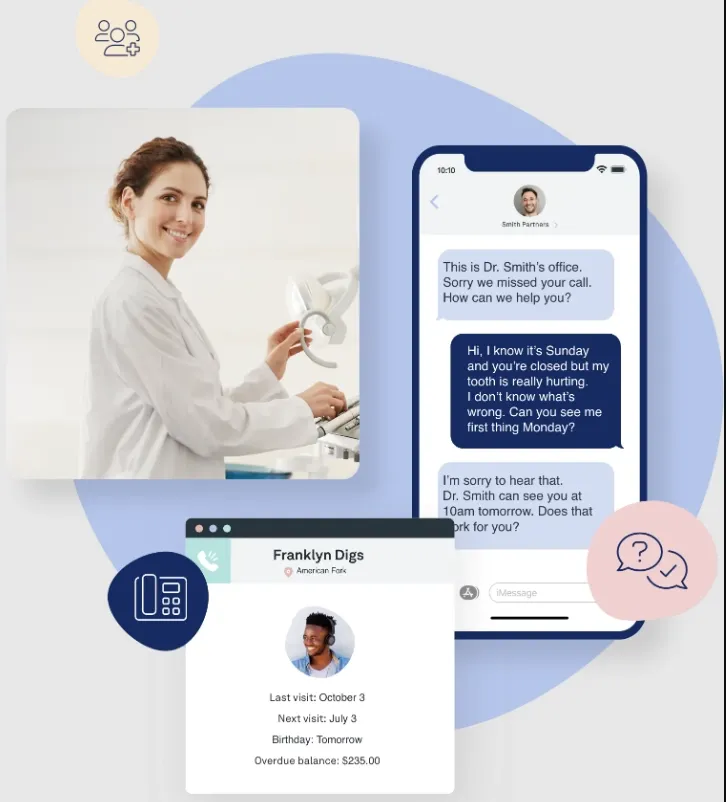
Weave combines VoIP phones with texting, reviews, payments, reminders, and call analytics. Think “phones + patient comms + payments” in one system—built for busy front desks.
Best for:
Practices ready to modernize phones and consolidate communication (call + text + pay) under one vendor.
Key features:
VoIP phone system with call pop and analytics
Two-way texting and automated reminders
Review requests and responses
Text-to-pay, cards-on-file
Digital forms + voicemail transcription
| Pros: | Cons: |
|---|---|
| Replaces phones and unifies comms in one dashboard | Higher price point; watch add-ons |
| Strong call workflows (missed-call texts, transcripts) | Occasional call quality sensitivity to internet |
| Payments and review tools are tightly integrated | Not a deep EHR/PM integration suite |
Pricing: Generally higher than basic messaging tools; quote-based, often tiered by features/locations.
REAL Customer Reviews:
Here is what people say about Weave.
“With the update, once it’s read it goes into the read folder so it can make it easy to lose in case I am in the middle of doing other things. I’d prefer to archive it when I’m done instead of it automatically going under ‘read’. also when surpassing the cover sheet, I get asked every time and more than once. I would like to be asked once and that’s it.” - G2 (source)
“We ran into some limitations that impacted our daily operations. The pricing felt a bit high compared to what we were getting, especially as our practice grew and needed more robust features. We also experienced occasional technical glitches and delays in customer support response, which became frustrating during busy times.” - Capterra (source)
Related: Top Weave Alternatives for Your Business in 2026
What it does:
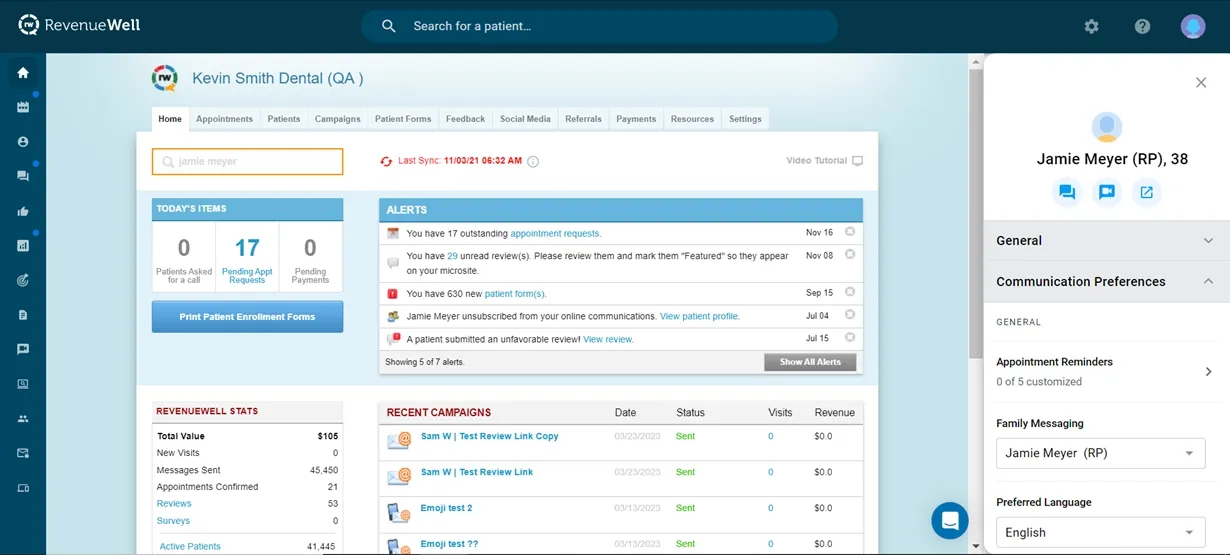
RevenueWell is a dental-specific engagement and marketing platform. It powers reminders, recalls, two-way messaging, email campaigns, social posting, online forms, teledentistry and reputation.
Best for:
Dental practices and DSOs that want deeper dental marketing and communication in one place.
Key features:
Dental recall/reactivation and reminders
Two-way text/email + review management
Marketing campaigns (email, social)
Online forms and patient portal
Teledentistry and basic website tools
| Pros: | Cons: |
|---|---|
| Dental-native features and templates | Primarily dental (limited for other specialties) |
| Strong marketing + patient journey coverage | Pricing can feel premium for small offices |
| Familiar workflows for dental PMs | Integrations outside dental PMs are limited |
Pricing: Premium, quote-based; varies by modules and number of locations/providers.
REAL Customer Reviews:
Here is what people say about RevenueWell.
“Revenuewell is a very dishonest company that only cares for their bottom line. RW does not care if you are successful, they only care for the study stream of income they receive from you. I told them I was having financial problems, their solution was to upsell me to another contract promising me that the “advanced” SEO will pay for itself. It did not. I tried to get out of the contract and they basically said “screw you”. The customer service was terrible, especially with Niko, the person in charge of billing.” - Capterra (source)
“There are times that the patient’s communications take a number of minutes if not more to be sent out.” - G2 (source)
Related: Top RevenueWell Alternatives for Your Business in 2026

What it does:
Solutionreach is a long-standing patient communication and retention suite. It centralizes reminders, two-way texting, digital intake, batch messaging, patient education, surveys and optional telehealth for multi-location consistency.
Best for:
Mid-to-large practices or groups standardizing messaging, recalls and outreach across locations.
Key features:
Reminders (SMS/email/voice) with two-way texting
Digital intake, secure docs, and patient education
Batch messaging and advanced outreach
Surveys/reputation along with optional telehealth
Mobile app for staff workflows
| Pros: | Cons: |
|---|---|
| Mature, healthcare-focused feature depth | UI can feel dated. Longer onboarding |
| Solid for standardized, high-volume outreach | Pricing is quote-based and can be complex |
| Broad toolset i.e. from reminders to education | Some users report slower support responses |
Pricing: Quote-based, typically mid-to-premium depending on features and footprint.
REAL Customer Reviews:
Here is what people say about Solutionreach.
“They used to be better - they used to have good support, they used to have a reliable platform, they used to be a more personable company.” - Verified User in Hospital & Health Care - G2 (source)
“Customer service is terrible. If you have problems don’t expect a quick resolution. My team has had several issues and were unable to resolve them. I called and had a similar experience. I spoke with what I thought was an upper level manager to help us. Unfortunately, [sensitive content hidden] multiple times promised to help us and get back to us the same day and he failed to do so.” - Robert L. - Dentist - Hospital & Health Care - Capterra (source)
Related: Top Solutionreach Alternatives for Your Business in 2026
What it does:
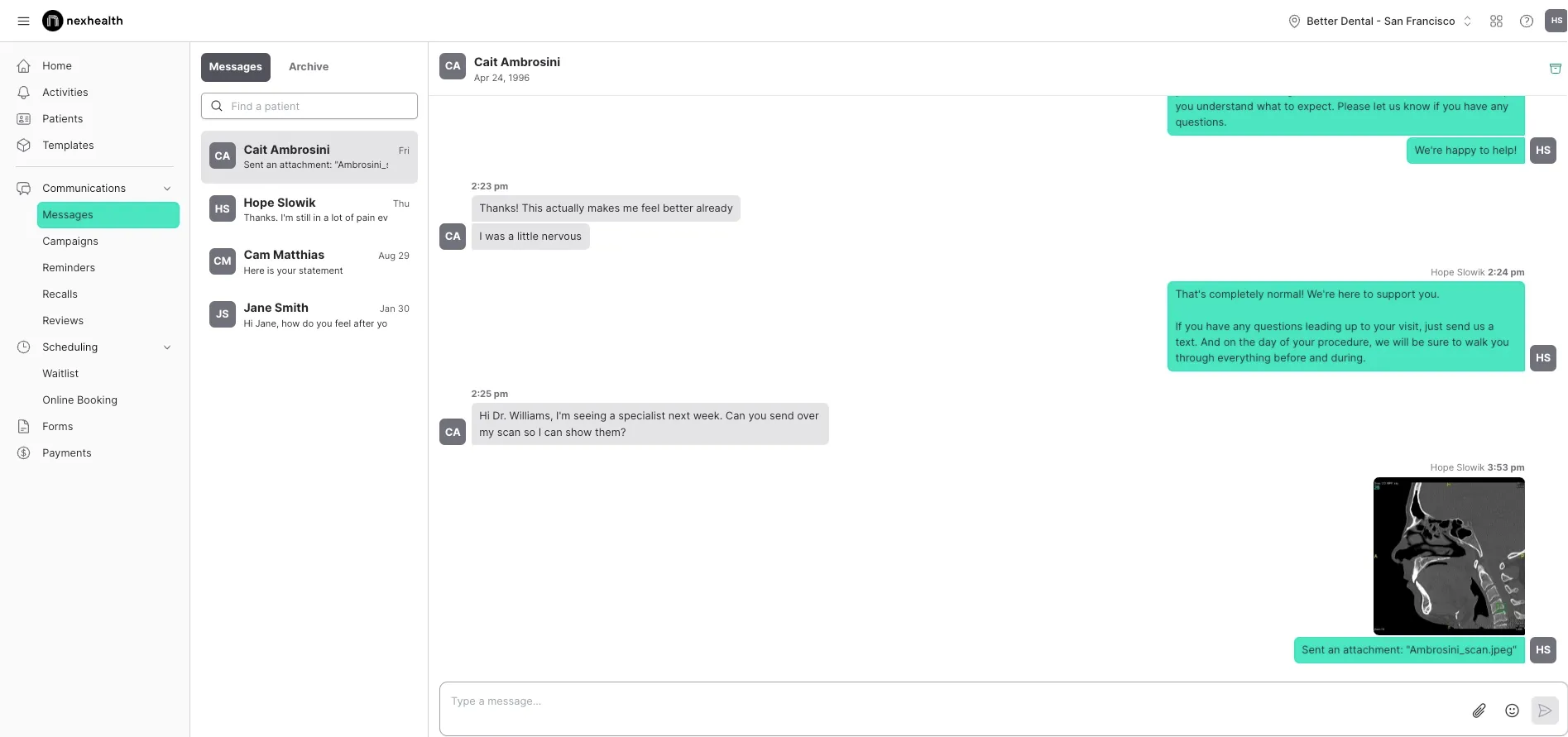
NexHealth is a patient experience platform built around real-time EHR/PM synchronization. It streamlines online booking, digital forms, reminders, insurance verification, payments and post-visit review requests. This platform helps reduce manual data entry and keeps schedules accurate.
Best for:
Practices that absolutely require deep, real-time integrations with their PM/EHR and want a modern, patient-friendly front end.
Key features:
Real-time EHR/PM sync (availability, forms, appointments)
Online scheduling and waitlist
Digital intake and e-sign consents
Eligibility/verification and online payments
Automated reminders, recalls, and review requests
Patient messaging and campaigns
| Pros: | Cons: |
|---|---|
| Excellent integration depth; less manual reconciliation | Premium pricing; per-provider models add up |
| Polished UX for both patients and staff | Workflows can feel less flexible for niche needs |
| Strong reduction in front-desk workload | Implementation rigor may require dedicated time |
Pricing: Premium, quote-based typically higher than SMB-focused tools.
REAL Customer Reviews:
Here is what people say about NexHealth.
“Sometimes patients tell us that they received a notice with the wrong time, also patients that have cancelled for the day and have been removed from the schedule still get an appointment reminder for the day” - Capterra (source)
“While NexHealth offers many great features, one potential downside is that it may not be fully customizable for all healthcare practices, depending on their specific needs. Some users may find certain integrations or workflows a bit rigid, which can limit flexibility. Additionally, the platform could benefit from a more advanced reporting system for deeper insights into patient data.” - G2 (source)
Related: Top NexHealth Alternatives for Your Business in 2026
What it does:
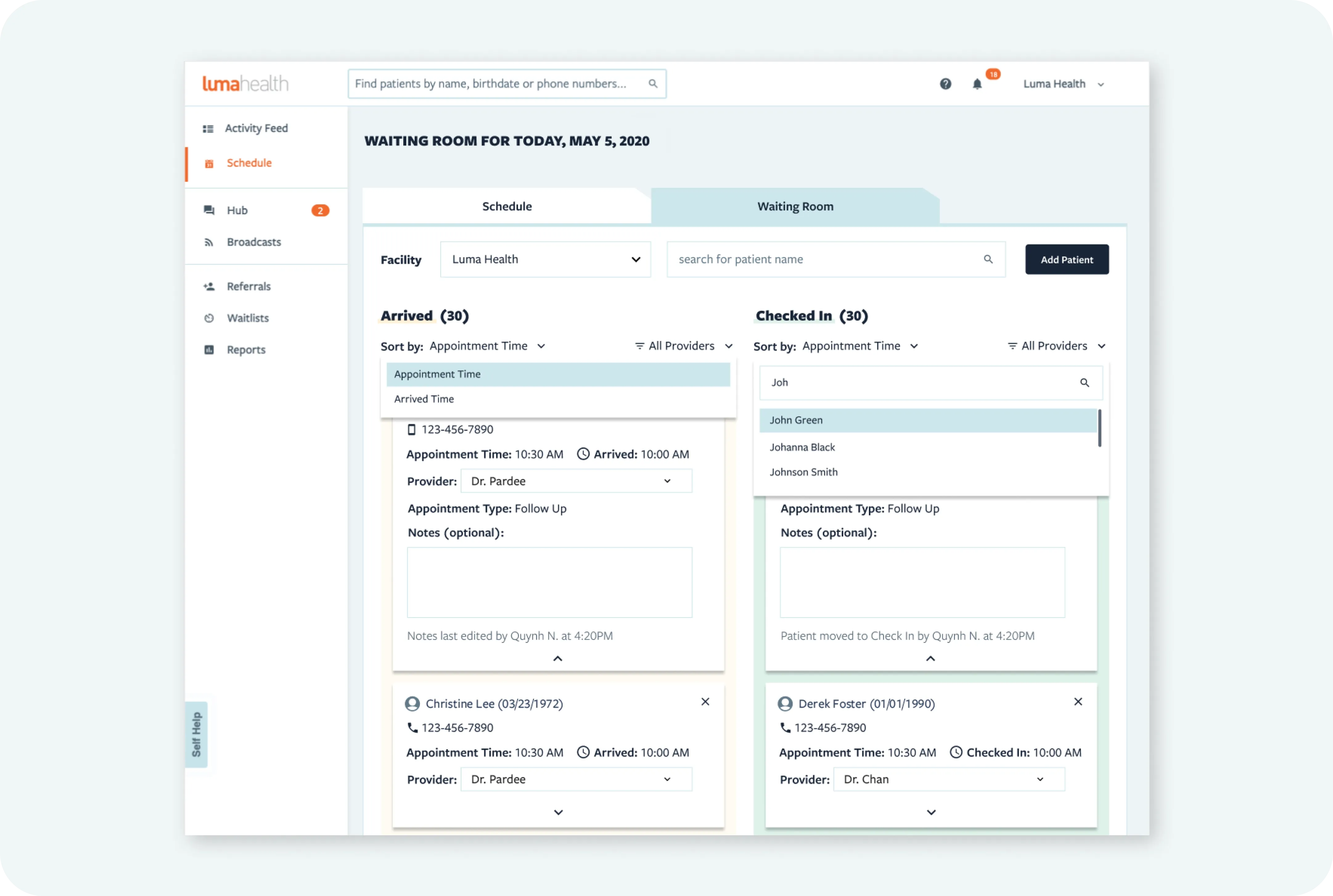
Luma Health is an AI-native Patient Success Platform that tackles access, referrals, scheduling, waitlists, messaging, intake and broadcast communications. Its automation engine helps large organizations fill schedules faster and simplify complex patient journeys.
Best for:
Enterprise health systems and multi-specialty groups that want high automation at scale and deep EHR connectivity.
Key features:
AI-driven workflows (access, referrals, recalls)
Smart scheduling and automated waitlist fill
Two-way patient messaging, broadcast alerts
Digital intake, eligibility checks, and payments
Advanced analytics and staff tasking
Extensive EHR integrations
| Pros: | Cons: |
|---|---|
| Powerful automation that reduces manual outreach | Overkill for small clinics; longer ramp-up |
| Great at filling last-minute cancellations and closing gaps | Custom pricing and implementation timelines |
| Enterprise-grade analytics and governance | Requires strong internal process ownership |
Pricing: Custom/quote-based, aligned to enterprise footprints.
REAL Customer Reviews:
Here is what people say about Luma Health.
“They think they could approve their response time. It felt a little Sometimes it took longer than expected to get a response back.That’s very frustrating when you need a reply back quickly and don’t hear anything.” - Capterra (source)
“Constantly have to refresh to view new messages, receiver does not receive any links that are sent ever, when using multiple systems, you do not get any alert to notify you there is a new message so you have to constantly check and refresh” - G2 (source)
Related: Top Luma Health Alternatives for Your Business in 2026
What it does:
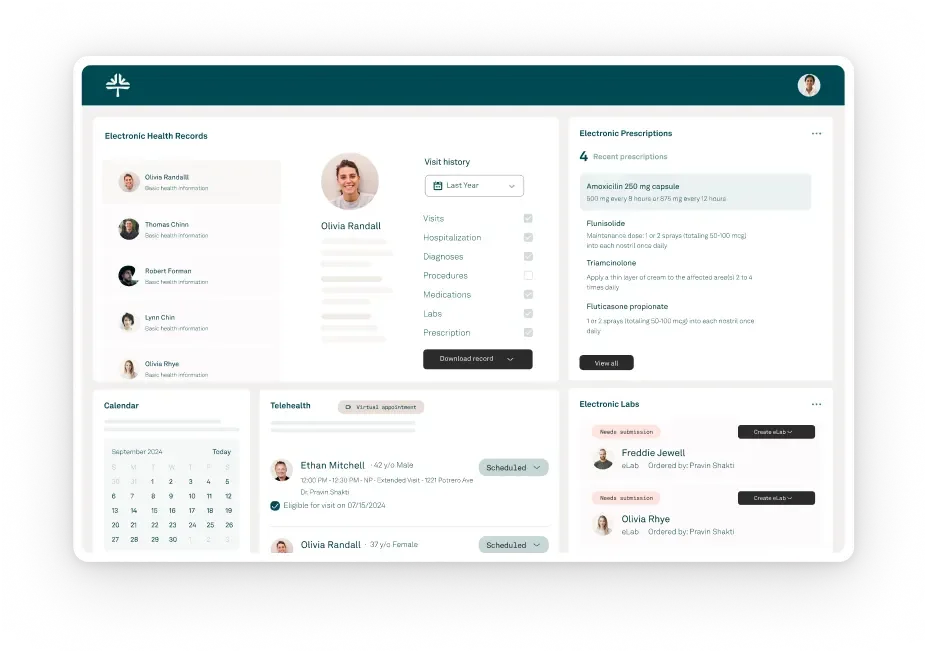
Tebra combines EHR, billing, patient experience and marketing (websites/SEO, reviews) into one platform. The tool is designed to connect clinical notes, front-office operations, online visibility and revenue cycle.
Best for:
Independent practices and small groups that want one platform for clinical documentation, billing, scheduling, reputation, and growth.
Key features:
EHR + eRx + templates and telehealth
Eligibility, claims, payments and billing workflows
Online scheduling, reminders and digital intake
Reviews/reputation, websites and directory listings
Centralized analytics and dashboards
| Pros: | Cons: |
|---|---|
| True “all-in-one” across clinical + front office + marketing | Learning curve across multiple modules |
| Strong patient acquisition and reputation tools | Higher total cost than point solutions |
| Fewer integrations to maintain | You may pay for functions you won’t fully use |
Pricing: Quote-based, typically mid-to-premium depending on modules/users.
REAL Customer Reviews:
Here is what people say about Tebra.
“Tebra presents itself as a comprehensive solution for providers, yet in reality, it falls short in every critical area. The clearinghouse consistently rejects claims, making the billing process inefficient and unreliable. Additionally, the requirement to download a desktop version just to conduct billing is outdated and inconvenient. To make matters worse, customer service is unresponsive, often taking days or even weeks to provide assistance. This platform fails to deliver on its promises, creating more frustration than solutions.” - Capterra (source)
“When uploading documents into the patient portal, it only lets you upload very little data, which makes it hard to upload intakes and medical records.” - G2 (source)
Related: Top Tebra Alternatives for Your Business in 2026
What it does:
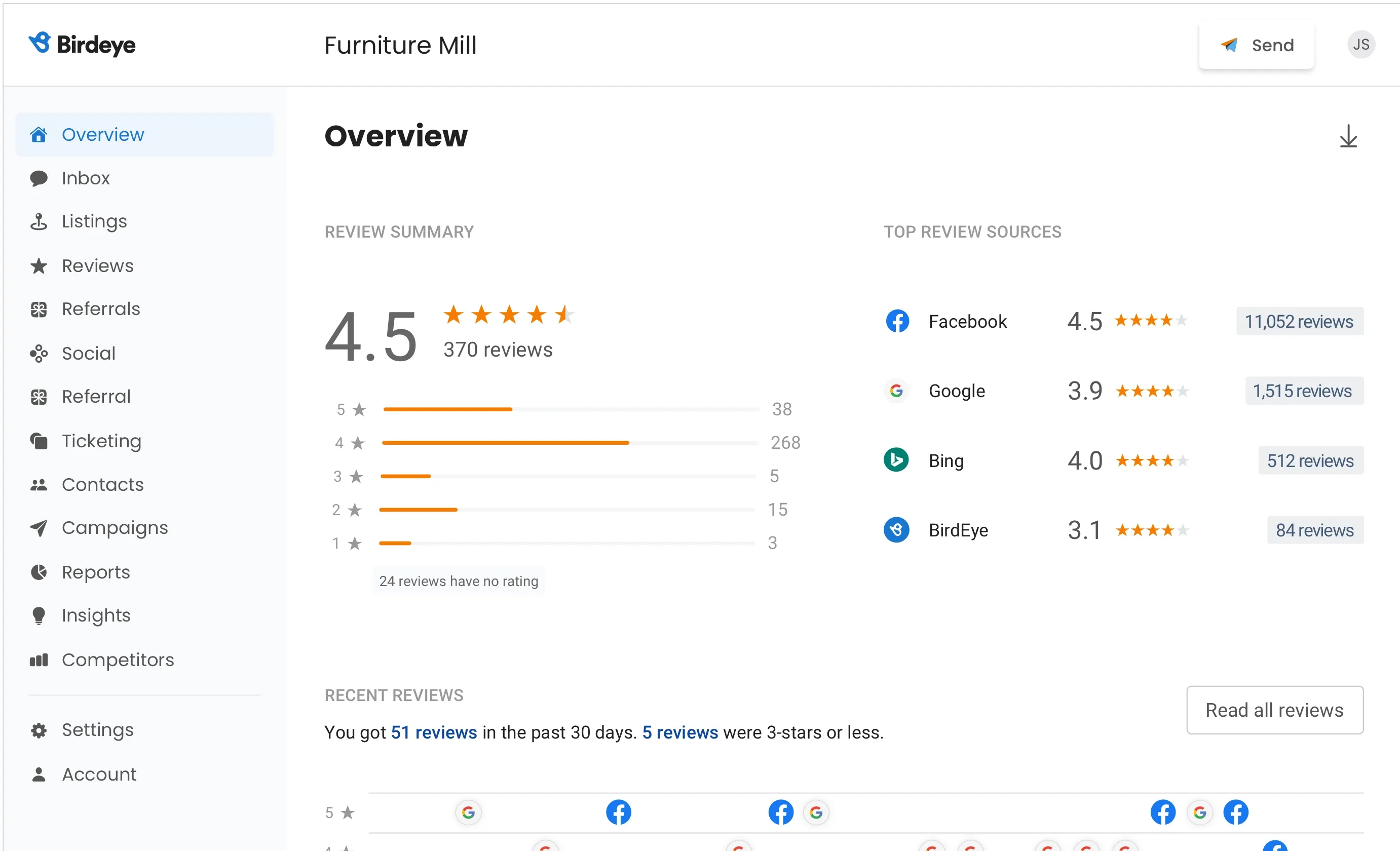
Birdeye is a reputation and local experience platform focused on multi-location growth. It accelerates reviews, manages listings, centralizes messaging (SMS/webchat) and uses AI to craft responses to lift local SEO and conversions.
Best for:
Medical groups where review velocity with listings accuracy and lead capture are core drivers of new patient volume.
Key features:
Review generation and AI-assisted response
Unified inbox with website chat lead capture
Listings management across directories
Surveys/feedback and simple automations
Light payments/text-to-pay options in some tiers
| Pros: | Cons: |
|---|---|
| Excellent at scaling reviews and local SEO | Premium pricing for larger footprints |
| Centralized messaging and strong multi-location controls | Healthcare-specific workflows are lighter than EHR-centric tools |
| Helpful AI for faster, consistent responses | Limited deep clinical integrations |
Pricing: Premium, quote-based; varies by locations and modules.
REAL Customer Reviews:
Here is what people say about BirdEye.
We had a very negative experience with Birdeye, I would stay away - Reddit (source)
Won’t leave me alone, and when I searched my name, they’re ranking above actual organic listings. I haven’t engaged with this company, and won’t. I hate online marketing firms that do this - they engage you, but then if you don’t purchase their services (or are in the process of thinking about it) they use their massive reach to rank you anyway. - Trustpilot (source)
Don’t use this company. They are a scam and a waste of time. This company should not be able to cold call people. - G2 (source)
Related: Top BirdEye Alternatives for Your Business in 2026
Best For: SMB healthcare practices wanting AI + simplicity
Key Strengths: Unified inbox (SMS / Google / Facebook / Instagram /Web Chat / Email), AI follow-ups, reviews, scheduling, payments, analytics
Notable Limitations: Best for small to mid teams
EHR Integration Depth: Basic → Expanding
Telehealth: No
Payments/Text-to-Pay: Yes
Review Generation: Excellent
Unified Inbox: Yes
Starts at $59/mo
Best For: Reputation-first growth via texting
Key Strengths: SMS review asks, webchat, text-to-pay, unified messaging
Notable Limitations: Higher cost; fewer healthcare-specific workflows
EHR Integration Depth: Light
Telehealth: No
Payments/Text-to-Pay: Yes
Review Generation: Excellent
Unified Inbox: Yes
Starts at ~$300/mo
Best For: Clinics that want phones + messaging in one
Key Strengths: VoIP + SMS, missed-call text, forms, reminders, payments, call analytics
Notable Limitations: Premium price; occasional call quality issues; some add-ons
EHR Integration Depth: Moderate
Telehealth: No
Payments/Text-to-Pay: Yes
Review Generation: Strong
Unified Inbox: Yes
Starts at ~$399/mo
Best For: Dental practices
Key Strengths: Dental-specific recalls, reviews, email marketing, social, portal
Notable Limitations: Dental-focused; limited outside dental EHRs; higher cost
EHR Integration Depth: Moderate (Dental)
Telehealth: No
Payments/Text-to-Pay: Limited
Review Generation: Strong
Unified Inbox: Partial
Starts at ~$300–$400/mo
Best For: Mid–large practices needing broad outreach
Key Strengths: Multi-channel reminders, two-way texting, digital intake, campaigns, telehealth
Notable Limitations: Complex pricing, dated UI, slower support for some
EHR Integration Depth: Moderate
Telehealth: Yes
Payments/Text-to-Pay: Limited
Review Generation: Strong
Unified Inbox: Partial (SMS/Email)
Starts at ~$300+/mo
Best For: Real-time scheduling with deep PMS/EHR sync
Key Strengths: Bi-directional sync, online booking, forms, eligibility, payments
Notable Limitations: ~$350/provider; customization limits; occasional glitches
EHR Integration Depth: Deep
Telehealth: No
Payments/Text-to-Pay: Yes
Review Generation: Strong
Unified Inbox: Partial (SMS/Email)
Starts at ~$350/provider/mo
Best For: Enterprise/specialty groups needing automation
Key Strengths: AI scheduling, recalls, digital intake, broadcast, analytics; major EHRs
Notable Limitations: Learning curve; quote-only; heavier implementation
EHR Integration Depth: Deep
Telehealth: No
Payments/Text-to-Pay: Yes
Review Generation: Strong
Unified Inbox: Partial (SMS)
Starts at ~$200+/mo (quote)
Best For: Independent clinics needing EHR + billing + marketing
Key Strengths: EHR, billing, scheduling, reviews, websites/SEO, portal
Notable Limitations: Higher price; onboarding complexity; mixed support
EHR Integration Depth: Deep (within stack)
Telehealth: Yes
Payments/Text-to-Pay: Yes
Review Generation: Strong
Unified Inbox: Partial
Starts at ~$300–$500/mo
Best For: Multi-industry reputation management
Key Strengths: Listings + reviews, messaging, webchat, surveys, analytics
Notable Limitations: Higher cost; limited healthcare-specific workflows
EHR Integration Depth: Light–Moderate
Telehealth: No
Payments/Text-to-Pay: Yes
Review Generation: Excellent
Unified Inbox: Yes
Starts at Quote-based
If you want the fastest path to measurable results, more authentic reviews, fewer missed leads, faster replies, and less front‑desk busywork. DemandHub is the most balanced upgrade from Doctible. It gives you a unified inbox across SMS, web chat, Google, Facebook and Instagram, plus AI‑powered follow‑ups, online scheduling and text‑to‑pay in an interface your team can learn in hours.
By using DemandHub, you can capture more website visitors, reactivate more inactive patients and build reputation momentum without enterprise‑level complexity or cost.
Here is the step by steps guide to switch from Doctible to DemandHub:
Book a Free Demo: Get a personalized demo with the DemandHub team. The team will walk you through the platform, answer your questions and show exactly how it fits your workflow better than Doctible.
Get a Customized Setup Plan: Once you decide to make the move, DemandHub creates a tailored onboarding plan for your practice. This usually includes setting up:
Sync Your Patient Data: DemandHub’s support team helps migrate key data (i.e. your contacts, appointment details, or review history) based on what Doctible allows for export. The goal is simple: nothing critical is lost and you are ready to communicate on day one.
Train Your Team: Because DemandHub is easy to use, most teams get up and running in just a few hours. You will get practical training resources and live support during your first few weeks.
Go Live: Once everything is set. You can go live with DemandHub and start reducing no‑shows, collecting more reviews and streamlining communication from day one.
Thinking about making the switch?
Book your free DemandHub demo and see how it compares to Doctible for your practice.
Are you looking to switch from Doctible or explore other options? If you like Doctible’s simplicity but feel boxed in by limited automations, lighter analytics, or integrations that don’t go deep enough, you are not alone. Many clinics, dentists, chiropractors and other practices start with Doctible for reminders and reviews. Then outgrow it as they scale locations, expand services or need richer workflow automation.
According to a study published in Press Ganey, patients who experience delays, poor communication, or difficulty reaching their provider are significantly more likely to switch providers, with communication-related issues ranking among the top drivers of patient dissatisfaction and leakage across healthcare systems.
In this article, I will break down the top 9 Doctible alternatives, from AI-powered messaging platforms to enterprise-grade patient engagement suites. For each alternative, you will have the intro, features pros and cons, pricing and customer reviews.
Doctible is a patient engagement platform used by dental, chiropractic, vision and other healthcare practices. It focuses on automated reminders, two-way texting, digital intake, recall/reactivation, online scheduling and review generation. The everyday tools that reduce phone time and help keep the schedule full. It is approachable for small teams and gets you quick wins in confirmations and reviews without heavy onboarding.
| Pros: | Cons: |
|---|---|
| Easy for front desk teams: Simple UI; staff ramps up fast | Integrations depth: Fewer or shallower EHR/PM integrations vs. enterprise platforms |
| Quick, visible wins: Reminders, recalls, and reviews deliver results early | Automation ceiling: Advanced AI workflows and branching logic are limited |
| Good value for SMBs: Solid feature coverage without enterprise bloat | Reporting/analytics: Can feel basic for multi-location leaders |
| Lower lift to launch: Lighter onboarding than many all-in-one suites | Scalability: As you grow, you may need broader tools (phones, payments, websites, call intelligence) |
While reading so many customer reviews on sites like G2, Capterra, and TrustPilot, I have gathered top reviews about Doctible.
We would love to see full integration with NextGen. While the current features are incredibly helpful, a deeper integration, especially one that pulls demographic and medical info directly into the EHR, would make the workflow even more seamless. - Capterra (source)
The Daily Review needs improving. It doesn’t remove the patients who didn’t show up to their appointment, so careful attention needs to be paid when reviewing the list so as not to send that patient a review request. - G2 (source)
Doesn’t integrate with EMR, making for more steps for my staff. Also, they rope you into a self-renewing contract for $300/mo. Not worth it. - Capterra (source)
A lot of manual work - there is not much automation available - G2 (source)
Please note that the review sites update constantly. Feel free to cross-check recency and relevance for your specialty and tech stack.
I was reading multiple reviews of users who have used Doctible previously or considered using it. Here are the most common reasons that I found:
What it does:
DemandHub is an AI-powered patient engagement and growth platform that unifies SMS, Web Chat, Google, Facebook, Instagram and email into one inbox. It automates review requests, follow-ups, recalls, scheduling, and text-to-pay so your front desk spends less time chasing and more time serving patients.
Best for:
Small to mid-sized practices that want quick wins in reviews, response time, and reactivation without complex setup.
Key features:
Unified inbox (SMS, Web Chat, Google, FB, IG, email)
AI Re-engagement and automated follow-ups
Automated review requests (text & QR)
Online scheduling and waitlist
Text-to-pay and estimates
Lead Manager and Team Chat
Insights and benchmarking
| Pros: | Cons: |
|---|---|
| Very fast to implement; intuitive for front desk | EHR/PM integrations list is still growing |
| Strong review lift and lead capture from web chat-to-SMS | Best fit for SMB and mid-sized groups (not a full EHR suite) |
| Great ROI for SMB clinics; friendly support team | |
| AI automations reduce manual follow-up |
Pricing: $59/month, SMB-friendly plans that typically start around entry-level pricing with add-ons as needed.
REAL Customer Reviews:
Here is what people say about DemandHub.
“We love that the chatbot converts to text messages so our clients do not need to stay on our website in order to chat or book an appointment with us.” - Capterra (source)
“Keep communication with the patients it’s super easy and allows you to speed the process any time a quick information needs to be shared with them.” - G2 (source)
What it does:
Podium focuses on reputation growth and revenue via messaging. It makes it easy to collect reviews, text with patients, capture leads from web chat and get paid with text-to-pay. All of these boosts local SEO and conversions.
Best for:
Multi-location groups and clinics where review velocity and text-to-pay are top priorities.
Key features:
SMS review requests and automations
Unified inbox + web chat lead capture
Text-to-pay and invoicing
Feedback/survey tools
Basic automations and templates
| Pros: | Cons: |
|---|---|
| Excellent at generating authentic reviews, fast | Premium pricing and can add up across locations |
| Easy payment flows help reduce A/R | Healthcare-specific workflows are lighter |
| Clean, familiar interface for staff | Some advanced features require higher tiers |
Pricing: Premium, quote-based; typically higher than SMB-focused tools.
REAL Customer Reviews:
Here is what people say about Podium.
“The worst company I’ve ever dealt with! They don’t connect to Shopify, fail to send abandoned cart texts as promised, and never notify when an order ships. When you need help, they’re MIA! But they have no problem Charging $635 per month. Stay away, or you’ll regret it!” - Capterra (source)
“Communicating with clients via Podium is cumbersome. The mobile and desktop versions do not operate the same. On mobile, you can add multiple attachments simultaneously. Desktop top, each attachment has to be added individually and at a maximum of 3 per text. You also cannot like text messages. It seems like a simple thing, but it makes you look like you are using an SMS program instead of using your own phone (which is kinda the point).” - G2 (source)
You can also read my detailed guide that I have written on Podium alternatives. In this guide, I have compared Podium with other tools.
Related: Top Podium Alternatives for Your Business in 2026
What it does:
Weave combines VoIP phones with texting, reviews, payments, reminders, and call analytics. Think “phones + patient comms + payments” in one system—built for busy front desks.
Best for:
Practices ready to modernize phones and consolidate communication (call + text + pay) under one vendor.
Key features:
VoIP phone system with call pop and analytics
Two-way texting and automated reminders
Review requests and responses
Text-to-pay, cards-on-file
Digital forms + voicemail transcription
| Pros: | Cons: |
|---|---|
| Replaces phones and unifies comms in one dashboard | Higher price point; watch add-ons |
| Strong call workflows (missed-call texts, transcripts) | Occasional call quality sensitivity to internet |
| Payments and review tools are tightly integrated | Not a deep EHR/PM integration suite |
Pricing: Generally higher than basic messaging tools; quote-based, often tiered by features/locations.
REAL Customer Reviews:
Here is what people say about Weave.
“With the update, once it’s read it goes into the read folder so it can make it easy to lose in case I am in the middle of doing other things. I’d prefer to archive it when I’m done instead of it automatically going under ‘read’. also when surpassing the cover sheet, I get asked every time and more than once. I would like to be asked once and that’s it.” - G2 (source)
“We ran into some limitations that impacted our daily operations. The pricing felt a bit high compared to what we were getting, especially as our practice grew and needed more robust features. We also experienced occasional technical glitches and delays in customer support response, which became frustrating during busy times.” - Capterra (source)
Related: Top Weave Alternatives for Your Business in 2026
What it does:
RevenueWell is a dental-specific engagement and marketing platform. It powers reminders, recalls, two-way messaging, email campaigns, social posting, online forms, teledentistry and reputation.
Best for:
Dental practices and DSOs that want deeper dental marketing and communication in one place.
Key features:
Dental recall/reactivation and reminders
Two-way text/email + review management
Marketing campaigns (email, social)
Online forms and patient portal
Teledentistry and basic website tools
| Pros: | Cons: |
|---|---|
| Dental-native features and templates | Primarily dental (limited for other specialties) |
| Strong marketing + patient journey coverage | Pricing can feel premium for small offices |
| Familiar workflows for dental PMs | Integrations outside dental PMs are limited |
Pricing: Premium, quote-based; varies by modules and number of locations/providers.
REAL Customer Reviews:
Here is what people say about RevenueWell.
“Revenuewell is a very dishonest company that only cares for their bottom line. RW does not care if you are successful, they only care for the study stream of income they receive from you. I told them I was having financial problems, their solution was to upsell me to another contract promising me that the “advanced” SEO will pay for itself. It did not. I tried to get out of the contract and they basically said “screw you”. The customer service was terrible, especially with Niko, the person in charge of billing.” - Capterra (source)
“There are times that the patient’s communications take a number of minutes if not more to be sent out.” - G2 (source)
Related: Top RevenueWell Alternatives for Your Business in 2026
What it does:
Solutionreach is a long-standing patient communication and retention suite. It centralizes reminders, two-way texting, digital intake, batch messaging, patient education, surveys and optional telehealth for multi-location consistency.
Best for:
Mid-to-large practices or groups standardizing messaging, recalls and outreach across locations.
Key features:
Reminders (SMS/email/voice) with two-way texting
Digital intake, secure docs, and patient education
Batch messaging and advanced outreach
Surveys/reputation along with optional telehealth
Mobile app for staff workflows
| Pros: | Cons: |
|---|---|
| Mature, healthcare-focused feature depth | UI can feel dated. Longer onboarding |
| Solid for standardized, high-volume outreach | Pricing is quote-based and can be complex |
| Broad toolset i.e. from reminders to education | Some users report slower support responses |
Pricing: Quote-based, typically mid-to-premium depending on features and footprint.
REAL Customer Reviews:
Here is what people say about Solutionreach.
“They used to be better - they used to have good support, they used to have a reliable platform, they used to be a more personable company.” - Verified User in Hospital & Health Care - G2 (source)
“Customer service is terrible. If you have problems don’t expect a quick resolution. My team has had several issues and were unable to resolve them. I called and had a similar experience. I spoke with what I thought was an upper level manager to help us. Unfortunately, [sensitive content hidden] multiple times promised to help us and get back to us the same day and he failed to do so.” - Robert L. - Dentist - Hospital & Health Care - Capterra (source)
Related: Top Solutionreach Alternatives for Your Business in 2026
What it does:
NexHealth is a patient experience platform built around real-time EHR/PM synchronization. It streamlines online booking, digital forms, reminders, insurance verification, payments and post-visit review requests. This platform helps reduce manual data entry and keeps schedules accurate.
Best for:
Practices that absolutely require deep, real-time integrations with their PM/EHR and want a modern, patient-friendly front end.
Key features:
Real-time EHR/PM sync (availability, forms, appointments)
Online scheduling and waitlist
Digital intake and e-sign consents
Eligibility/verification and online payments
Automated reminders, recalls, and review requests
Patient messaging and campaigns
| Pros: | Cons: |
|---|---|
| Excellent integration depth; less manual reconciliation | Premium pricing; per-provider models add up |
| Polished UX for both patients and staff | Workflows can feel less flexible for niche needs |
| Strong reduction in front-desk workload | Implementation rigor may require dedicated time |
Pricing: Premium, quote-based typically higher than SMB-focused tools.
REAL Customer Reviews:
Here is what people say about NexHealth.
“Sometimes patients tell us that they received a notice with the wrong time, also patients that have cancelled for the day and have been removed from the schedule still get an appointment reminder for the day” - Capterra (source)
“While NexHealth offers many great features, one potential downside is that it may not be fully customizable for all healthcare practices, depending on their specific needs. Some users may find certain integrations or workflows a bit rigid, which can limit flexibility. Additionally, the platform could benefit from a more advanced reporting system for deeper insights into patient data.” - G2 (source)
Related: Top NexHealth Alternatives for Your Business in 2026
What it does:
Luma Health is an AI-native Patient Success Platform that tackles access, referrals, scheduling, waitlists, messaging, intake and broadcast communications. Its automation engine helps large organizations fill schedules faster and simplify complex patient journeys.
Best for:
Enterprise health systems and multi-specialty groups that want high automation at scale and deep EHR connectivity.
Key features:
AI-driven workflows (access, referrals, recalls)
Smart scheduling and automated waitlist fill
Two-way patient messaging, broadcast alerts
Digital intake, eligibility checks, and payments
Advanced analytics and staff tasking
Extensive EHR integrations
| Pros: | Cons: |
|---|---|
| Powerful automation that reduces manual outreach | Overkill for small clinics; longer ramp-up |
| Great at filling last-minute cancellations and closing gaps | Custom pricing and implementation timelines |
| Enterprise-grade analytics and governance | Requires strong internal process ownership |
Pricing: Custom/quote-based, aligned to enterprise footprints.
REAL Customer Reviews:
Here is what people say about Luma Health.
“They think they could approve their response time. It felt a little Sometimes it took longer than expected to get a response back.That’s very frustrating when you need a reply back quickly and don’t hear anything.” - Capterra (source)
“Constantly have to refresh to view new messages, receiver does not receive any links that are sent ever, when using multiple systems, you do not get any alert to notify you there is a new message so you have to constantly check and refresh” - G2 (source)
Related: Top Luma Health Alternatives for Your Business in 2026
What it does:
Tebra combines EHR, billing, patient experience and marketing (websites/SEO, reviews) into one platform. The tool is designed to connect clinical notes, front-office operations, online visibility and revenue cycle.
Best for:
Independent practices and small groups that want one platform for clinical documentation, billing, scheduling, reputation, and growth.
Key features:
EHR + eRx + templates and telehealth
Eligibility, claims, payments and billing workflows
Online scheduling, reminders and digital intake
Reviews/reputation, websites and directory listings
Centralized analytics and dashboards
| Pros: | Cons: |
|---|---|
| True “all-in-one” across clinical + front office + marketing | Learning curve across multiple modules |
| Strong patient acquisition and reputation tools | Higher total cost than point solutions |
| Fewer integrations to maintain | You may pay for functions you won’t fully use |
Pricing: Quote-based, typically mid-to-premium depending on modules/users.
REAL Customer Reviews:
Here is what people say about Tebra.
“Tebra presents itself as a comprehensive solution for providers, yet in reality, it falls short in every critical area. The clearinghouse consistently rejects claims, making the billing process inefficient and unreliable. Additionally, the requirement to download a desktop version just to conduct billing is outdated and inconvenient. To make matters worse, customer service is unresponsive, often taking days or even weeks to provide assistance. This platform fails to deliver on its promises, creating more frustration than solutions.” - Capterra (source)
“When uploading documents into the patient portal, it only lets you upload very little data, which makes it hard to upload intakes and medical records.” - G2 (source)
Related: Top Tebra Alternatives for Your Business in 2026
What it does:
Birdeye is a reputation and local experience platform focused on multi-location growth. It accelerates reviews, manages listings, centralizes messaging (SMS/webchat) and uses AI to craft responses to lift local SEO and conversions.
Best for:
Medical groups where review velocity with listings accuracy and lead capture are core drivers of new patient volume.
Key features:
Review generation and AI-assisted response
Unified inbox with website chat lead capture
Listings management across directories
Surveys/feedback and simple automations
Light payments/text-to-pay options in some tiers
| Pros: | Cons: |
|---|---|
| Excellent at scaling reviews and local SEO | Premium pricing for larger footprints |
| Centralized messaging and strong multi-location controls | Healthcare-specific workflows are lighter than EHR-centric tools |
| Helpful AI for faster, consistent responses | Limited deep clinical integrations |
Pricing: Premium, quote-based; varies by locations and modules.
REAL Customer Reviews:
Here is what people say about BirdEye.
We had a very negative experience with Birdeye, I would stay away - Reddit (source)
Won’t leave me alone, and when I searched my name, they’re ranking above actual organic listings. I haven’t engaged with this company, and won’t. I hate online marketing firms that do this - they engage you, but then if you don’t purchase their services (or are in the process of thinking about it) they use their massive reach to rank you anyway. - Trustpilot (source)
Don’t use this company. They are a scam and a waste of time. This company should not be able to cold call people. - G2 (source)
Related: Top BirdEye Alternatives for Your Business in 2026
Best For: SMB healthcare practices wanting AI + simplicity
Key Strengths: Unified inbox (SMS / Google / Facebook / Instagram /Web Chat / Email), AI follow-ups, reviews, scheduling, payments, analytics
Notable Limitations: Best for small to mid teams
EHR Integration Depth: Basic → Expanding
Telehealth: No
Payments/Text-to-Pay: Yes
Review Generation: Excellent
Unified Inbox: Yes
Starts at $59/mo
Best For: Reputation-first growth via texting
Key Strengths: SMS review asks, webchat, text-to-pay, unified messaging
Notable Limitations: Higher cost; fewer healthcare-specific workflows
EHR Integration Depth: Light
Telehealth: No
Payments/Text-to-Pay: Yes
Review Generation: Excellent
Unified Inbox: Yes
Starts at ~$300/mo
Best For: Clinics that want phones + messaging in one
Key Strengths: VoIP + SMS, missed-call text, forms, reminders, payments, call analytics
Notable Limitations: Premium price; occasional call quality issues; some add-ons
EHR Integration Depth: Moderate
Telehealth: No
Payments/Text-to-Pay: Yes
Review Generation: Strong
Unified Inbox: Yes
Starts at ~$399/mo
Best For: Dental practices
Key Strengths: Dental-specific recalls, reviews, email marketing, social, portal
Notable Limitations: Dental-focused; limited outside dental EHRs; higher cost
EHR Integration Depth: Moderate (Dental)
Telehealth: No
Payments/Text-to-Pay: Limited
Review Generation: Strong
Unified Inbox: Partial
Starts at ~$300–$400/mo
Best For: Mid–large practices needing broad outreach
Key Strengths: Multi-channel reminders, two-way texting, digital intake, campaigns, telehealth
Notable Limitations: Complex pricing, dated UI, slower support for some
EHR Integration Depth: Moderate
Telehealth: Yes
Payments/Text-to-Pay: Limited
Review Generation: Strong
Unified Inbox: Partial (SMS/Email)
Starts at ~$300+/mo
Best For: Real-time scheduling with deep PMS/EHR sync
Key Strengths: Bi-directional sync, online booking, forms, eligibility, payments
Notable Limitations: ~$350/provider; customization limits; occasional glitches
EHR Integration Depth: Deep
Telehealth: No
Payments/Text-to-Pay: Yes
Review Generation: Strong
Unified Inbox: Partial (SMS/Email)
Starts at ~$350/provider/mo
Best For: Enterprise/specialty groups needing automation
Key Strengths: AI scheduling, recalls, digital intake, broadcast, analytics; major EHRs
Notable Limitations: Learning curve; quote-only; heavier implementation
EHR Integration Depth: Deep
Telehealth: No
Payments/Text-to-Pay: Yes
Review Generation: Strong
Unified Inbox: Partial (SMS)
Starts at ~$200+/mo (quote)
Best For: Independent clinics needing EHR + billing + marketing
Key Strengths: EHR, billing, scheduling, reviews, websites/SEO, portal
Notable Limitations: Higher price; onboarding complexity; mixed support
EHR Integration Depth: Deep (within stack)
Telehealth: Yes
Payments/Text-to-Pay: Yes
Review Generation: Strong
Unified Inbox: Partial
Starts at ~$300–$500/mo
Best For: Multi-industry reputation management
Key Strengths: Listings + reviews, messaging, webchat, surveys, analytics
Notable Limitations: Higher cost; limited healthcare-specific workflows
EHR Integration Depth: Light–Moderate
Telehealth: No
Payments/Text-to-Pay: Yes
Review Generation: Excellent
Unified Inbox: Yes
Starts at Quote-based
If you want the fastest path to measurable results, more authentic reviews, fewer missed leads, faster replies, and less front‑desk busywork. DemandHub is the most balanced upgrade from Doctible. It gives you a unified inbox across SMS, web chat, Google, Facebook and Instagram, plus AI‑powered follow‑ups, online scheduling and text‑to‑pay in an interface your team can learn in hours.
By using DemandHub, you can capture more website visitors, reactivate more inactive patients and build reputation momentum without enterprise‑level complexity or cost.
Here is the step by steps guide to switch from Doctible to DemandHub:
Book a Free Demo: Get a personalized demo with the DemandHub team. The team will walk you through the platform, answer your questions and show exactly how it fits your workflow better than Doctible.
Get a Customized Setup Plan: Once you decide to make the move, DemandHub creates a tailored onboarding plan for your practice. This usually includes setting up:
Sync Your Patient Data: DemandHub’s support team helps migrate key data (i.e. your contacts, appointment details, or review history) based on what Doctible allows for export. The goal is simple: nothing critical is lost and you are ready to communicate on day one.
Train Your Team: Because DemandHub is easy to use, most teams get up and running in just a few hours. You will get practical training resources and live support during your first few weeks.
Go Live: Once everything is set. You can go live with DemandHub and start reducing no‑shows, collecting more reviews and streamlining communication from day one.
Thinking about making the switch?
Book your free DemandHub demo and see how it compares to Doctible for your practice.