9 Best Demandforce Alternatives & Competitors in 2026



If you are looking for Demandforce alternatives that can boost your healthcare practice’s efficiency, patient interactions, and online presence? You are not alone. Many healthcare providers are turning away from Demandforce due to concerns about high pricing, limited customization, outdated interfaces, or inconsistent support.
And reputation is a big reason. Rater8’s research found that 84% of patients check online reviews before choosing a new provider.
In this guide, I will share the top 9 Demandforce alternatives in 2026. Each platform is carefully selected based on features, pricing transparency, ease of use, real customer reviews, and the overall value they bring to healthcare practices.
Demandforce is a popular patient engagement software used by dental, optometry, veterinary, and wellness clinics. It provides automated appointment reminders, patient communications, review management, surveys, and basic marketing.
To give you a clear and honest picture, I have gathered these pros and cons based on real user feedback from G2, Capterra, Trustpilot, and GetApp.
| Pros: | Cons: |
|---|---|
| Reduces missed appointments effectively | Pricing can be unclear and expensive |
| Simplifies online reputation management | Limited customization and flexibility |
| Easy for basic marketing tasks | Outdated user interface |
| Inconsistent customer support |
After reading lots of reviews on G2, Capterra, Trustpilot, and other platforms, a few patterns stood out. Like any software, Demandforce has its strengths but it also comes with trade-offs that may not work for every practice. Here is what people are saying:
Note: All the reviews are from 2026.
For the price, the review request is all we used it for. So we were essentially paying $200 for an automated Request for Review email. - Capterra (source)
Demandforce integrated with my POS perfectly. Its ability to schedule, remind, and have 2-way communication was awesome. - Capterra (source)
I do not recommend Demandforce. The onboarding process is terrible, so I suggest you avoid it. They require a one-year contract and start charging you from the day you sign up. Onboarding takes two months, during which you only have 60 days to cancel. You won’t know how this service will work for you until after that period. Additionally, they rarely answer their phone calls. - Trustpilot (source)
Demandforce would often text our clients the wrong times for confirmation messages. For example if the client was receiving a haircut booked at 1pm followed by a conditioning treatment booked at 2pm (but all on the same ticket), it would text them with a confirmation of the time the treatment was starting at 2pm, not the time the whole appointment started at 1pm. Clients were getting confused and upset by this and would call daily to complain. We called both Daysmart and Demandforce for a fix for this and we were told nothing was wrong and the system was functioning perfectly. - G2 (source)
Horrible. There is nothing about this company or platform that I would recommend to anyone. - Capterra (source)
Practices often consider switching due to:
Let’s now explore the top 9 Demandforce alternatives for patient acquisition and practice growth.
Here is a detailed breakdown of the best Demandforce alternatives to help you choose the right platform for your practice.
What it does:
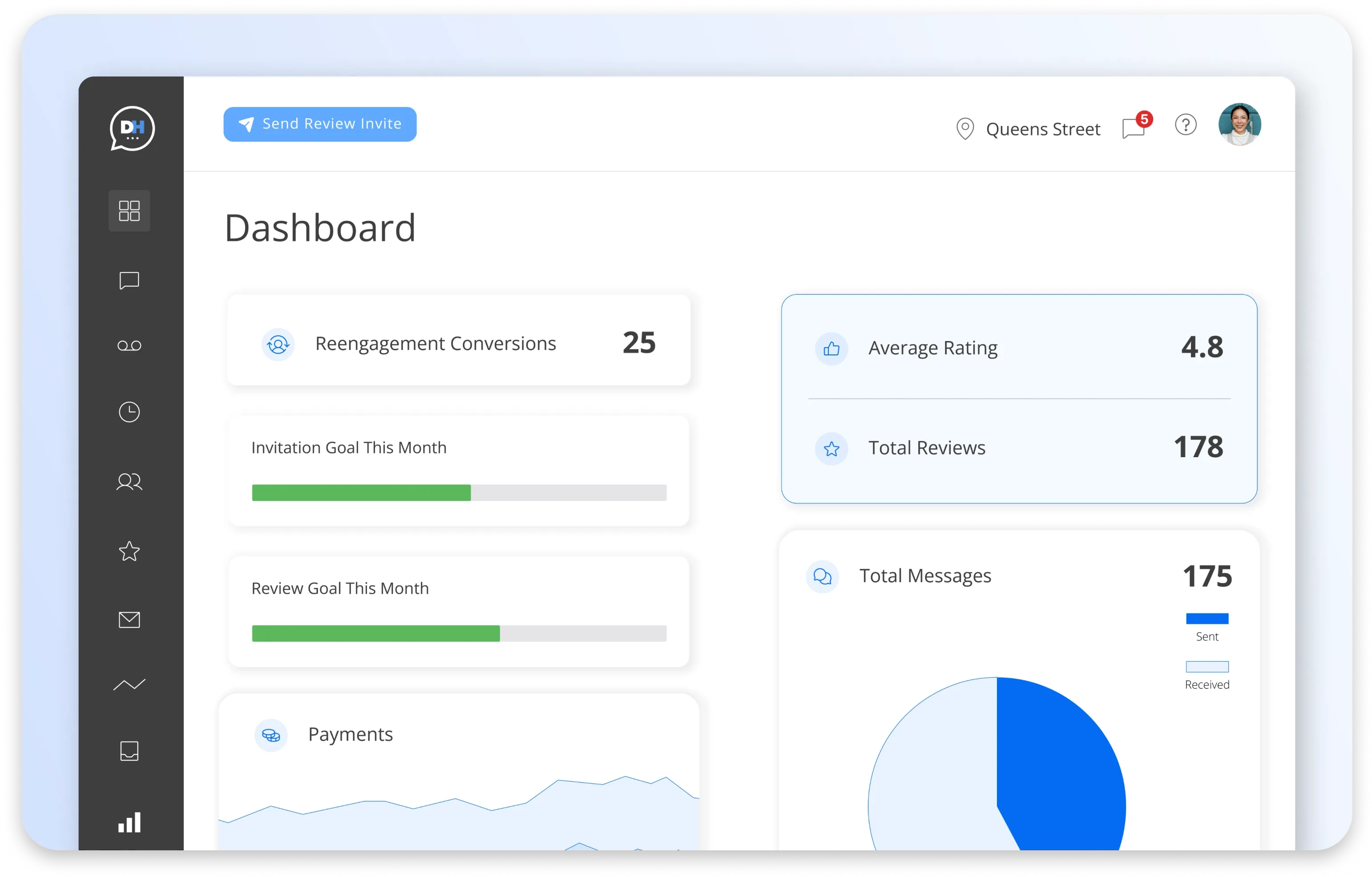
DemandHub is an AI-Powered patient engagement platform designed for small to mid-sized practices. It unifies communication channels into a single inbox and leverages AI to automate tasks like appointment reminders, reviews, payments, and lead management, significantly reducing administrative burdens.
Best for: Small to mid-sized practices focusing on AI-powered patient engagement.
Key Features:
| Pros: | Cons: |
|---|---|
| Affordable and transparent pricing starting at $59/month | Still growing EHR integration list (but expanding fast) |
| AI tools reduce administrative workload significantly | Best suited for small to mid-sized practices |
| Easy setup and intuitive interface | |
| Excellent customer support | |
| Trusted by top brands like Kia, GM, and Cadillac | |
| Great reputation management features |
REAL Customer Reviews:
Here is what people say about DemandHub.
Their customer service is top notch! I have also really enjoyed the ease of communicating with our clients and I have found the service to be a real value add for our team and customers. - Capterra (source)
Demandhub provides a single point of contact for reaching out users across multiple channels such as Email, Sms, Whatsapp, social media etc. One feature which stands out is asking users to rate our services on google platforms. This has helped us in improving our ratings. - Gartner (source)

What it does:
Solutionreach is a cloud-based patient relationship management tool that focuses on enhancing patient communication at every stage of care. It automates routine outreach, including appointment reminders, surveys, telehealth sessions, and educational campaigns, helping practices minimize no-shows and boost patient retention.
Best for: Mid to large-sized practices requiring comprehensive patient communication.
Key Features:
| Pros: | Cons: |
|---|---|
| Extensive patient engagement capabilities | Complex pricing |
| Robust integrations | Dated interface |
| Slow customer support |
Pricing: Starts around $300/month (customized quotes).
REAL Customer Reviews:
Here is what people say about Solutionreach.
They used to be better. They used to have good support, they used to have a reliable platform, they used to be a more personable company. - G2 (source)
Customer service is terrible. If you have problems don’t expect a quick resolution. My team has had several issues and were unable to resolve them. I called and had a similar experience. I spoke with what I thought was an upper level manager to help us. Unfortunately, [sensitive content hidden] multiple times promised to help us and get back to us the same day and he failed to do so. - Capterra (source)
Related: Top Demandforce Alternatives for Your Business in 2026
What it does:
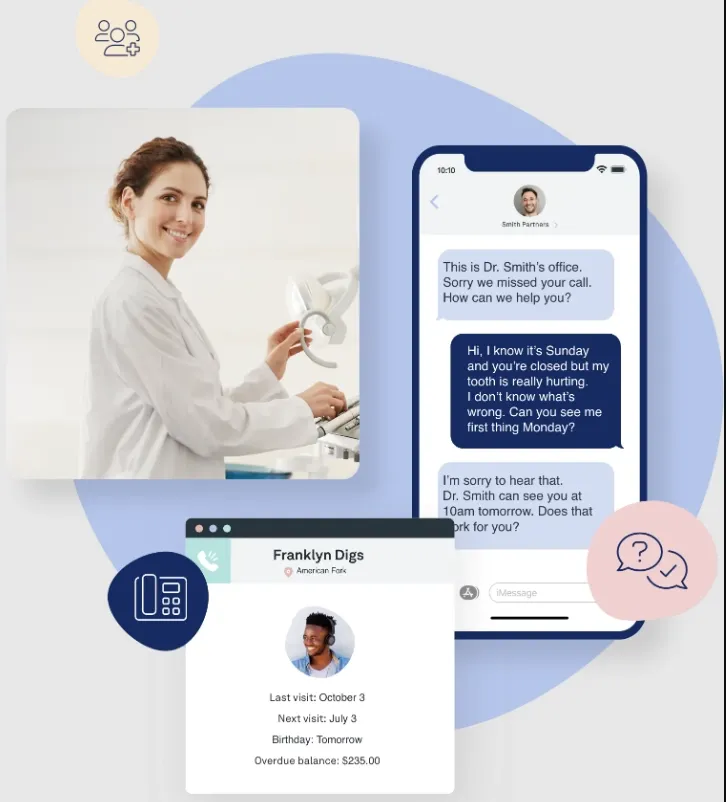
Weave combines communication tools and VoIP phone services into one seamless platform, streamlining patient interactions. It offers texting, call management, automated reminders, digital forms, and payments, ideal for practices wanting a unified communication experience.
Best for: Clinics needing integrated communication and phone solutions.
Key Features:
| Pros: | Cons: |
|---|---|
| All-in-one communication system | Higher pricing |
| Simple payment processes | Occasional call quality issues |
Pricing: Around $399/month.
REAL Customer Reviews:
Here is what people say about Weave.
We ran into some limitations that impacted our daily operations. The pricing felt a bit high compared to what we were getting, especially as our practice grew and needed more robust features. We also experienced occasional technical glitches and delays in customer support response, which became frustrating during busy times. - Capterra (source)
Related: Top Weave Alternatives for Your Business in 2026
What it does:
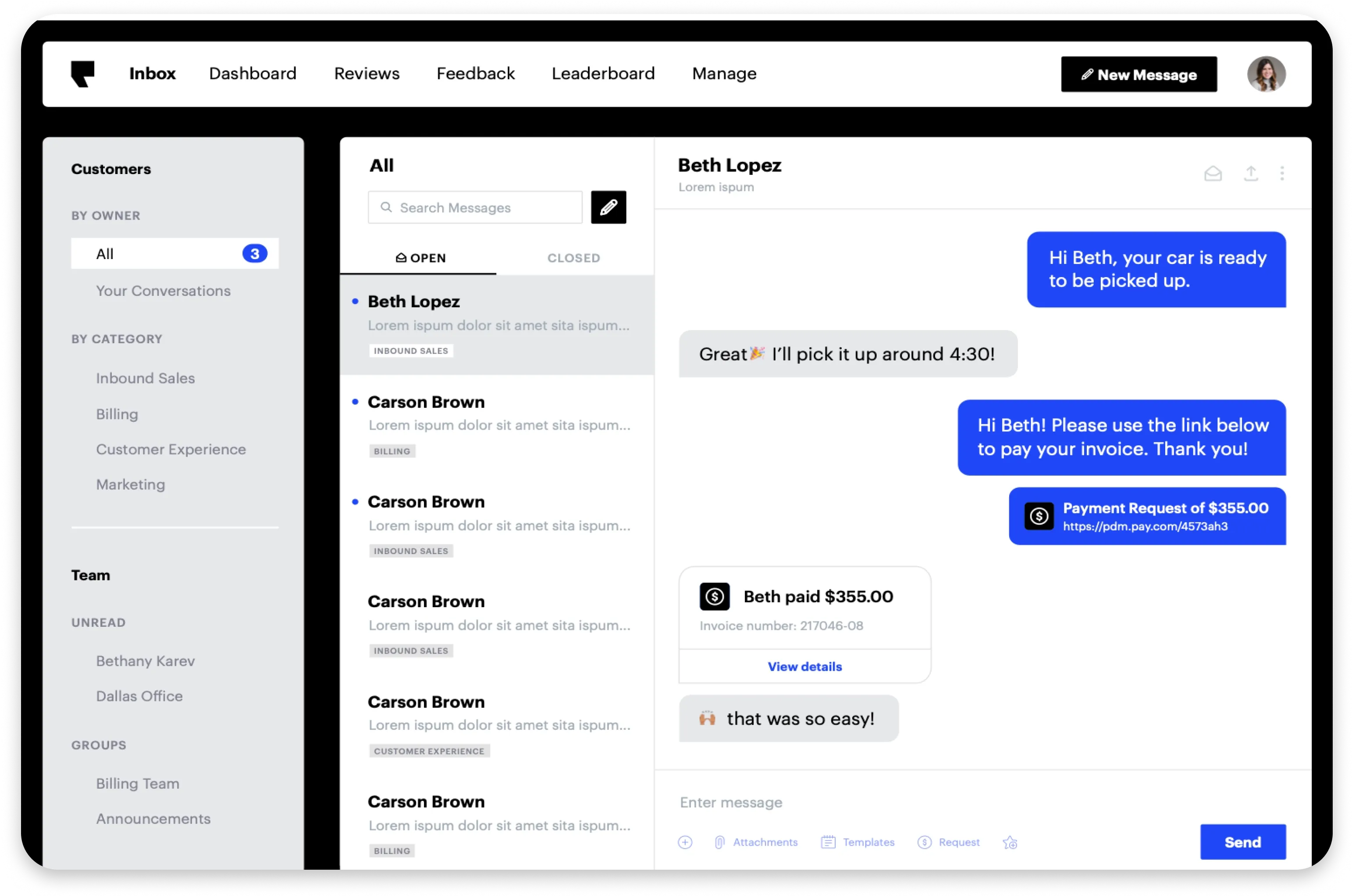
Podium excels in reputation management and patient communication, focusing heavily on collecting and managing online reviews. It provides powerful tools for unified texting, web chat, patient payments, and feedback management, making it a robust choice for practices aiming to strengthen their online presence.
Best for: Reputation management and SMS communications.
Key Features:
| Pros: | Cons: |
|---|---|
| Strong reputation management | Expensive for smaller clinics |
| Easy-to-use interface | Limited healthcare-specific customizations |
Pricing: Typically around $300/month.
REAL Customer Reviews:
Here is what people say about Podium.
Majority of the platform for phone support and management, lack of crucial voicemail controls and reasonable features a less developed phone system would have. - G2 (source)
These guys are super manipulative and their system has had so many issues since I have been with them. My account manager “befriended” me and basically manipulated me via encouragement into opening a second account, now that business idea did not eventuate but they locked me in for another 12 months, after my account manager glossed over my request to stop the second subscription. Do not use them, they promise the world and will do anything to take your money! - Capterra (source)
You can also read my detailed guide that I have written on Podium alternatives. In this guide, I have compared Podium with other tools.
Related: Top Podium Alternatives for Your Business in 2026
What it does:
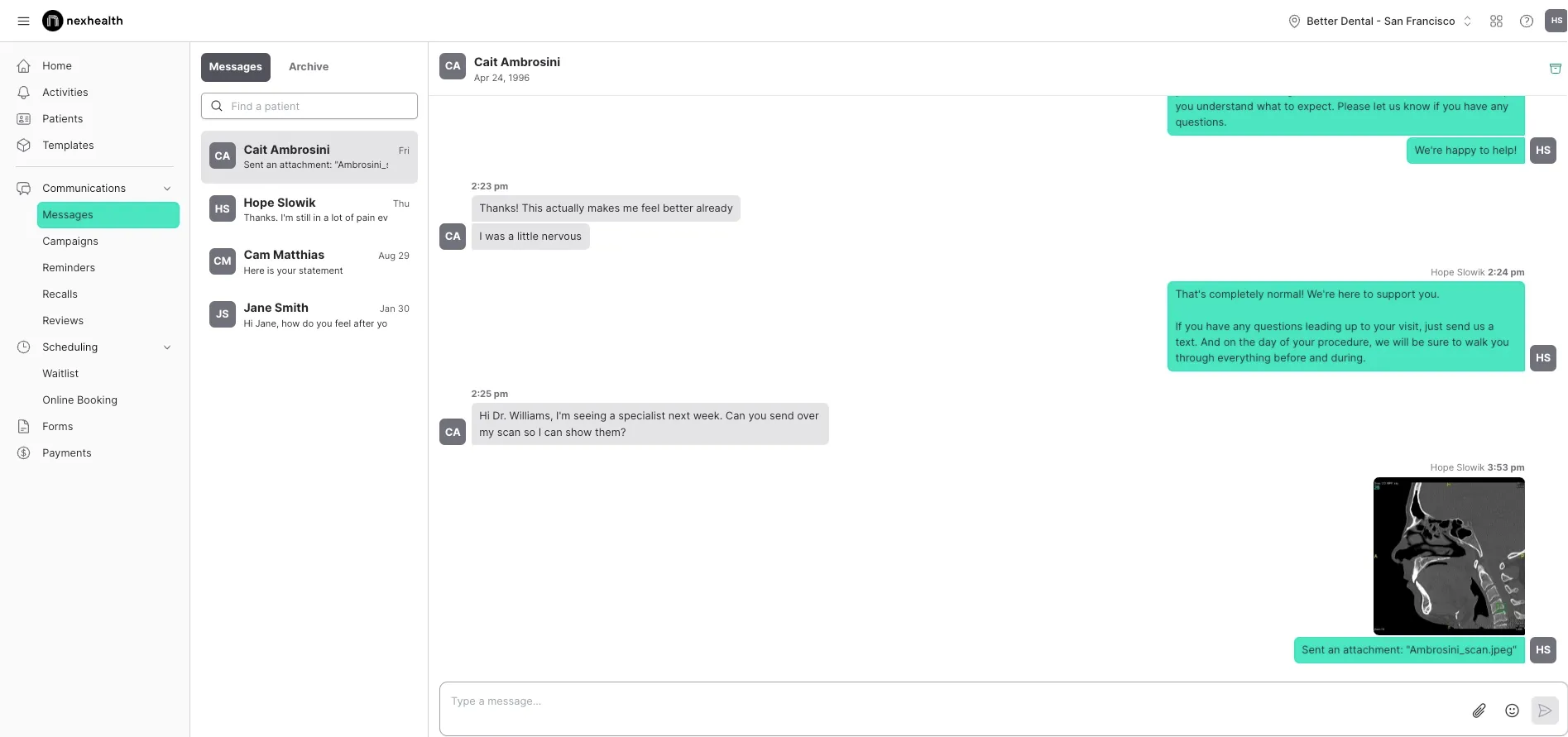
NexHealth is known for its deep integration with electronic health records (EHR) systems. It provides real-time syncing, online scheduling, digital intake forms, insurance verification, and automated patient messaging, tailored to streamline practice workflows efficiently.
Best for: Deep EHR system integrations.
Key Features:
| Pros: | Cons: |
|---|---|
| Excellent EHR integration | High monthly pricing (around $350/provider) |
| Patient-friendly tools | Limited customization |
Pricing: About $350/provider/month.
REAL Customer Reviews:
Here is what people say about NexHealth.
We have used Nexhealth for the past year. When it works, it works well. However, the service is down for several weeks every two months. This is frustrating, and customer service is very slow to fix the issue. - Trustpilot (source)
issues with syncing from ipad quite often, I know this always tells us if they are having an issue so that helps that we do not need to call customer service. - Capterra (source)
Related: Top NexHealth Alternatives for Your Business in 2026
What it does:
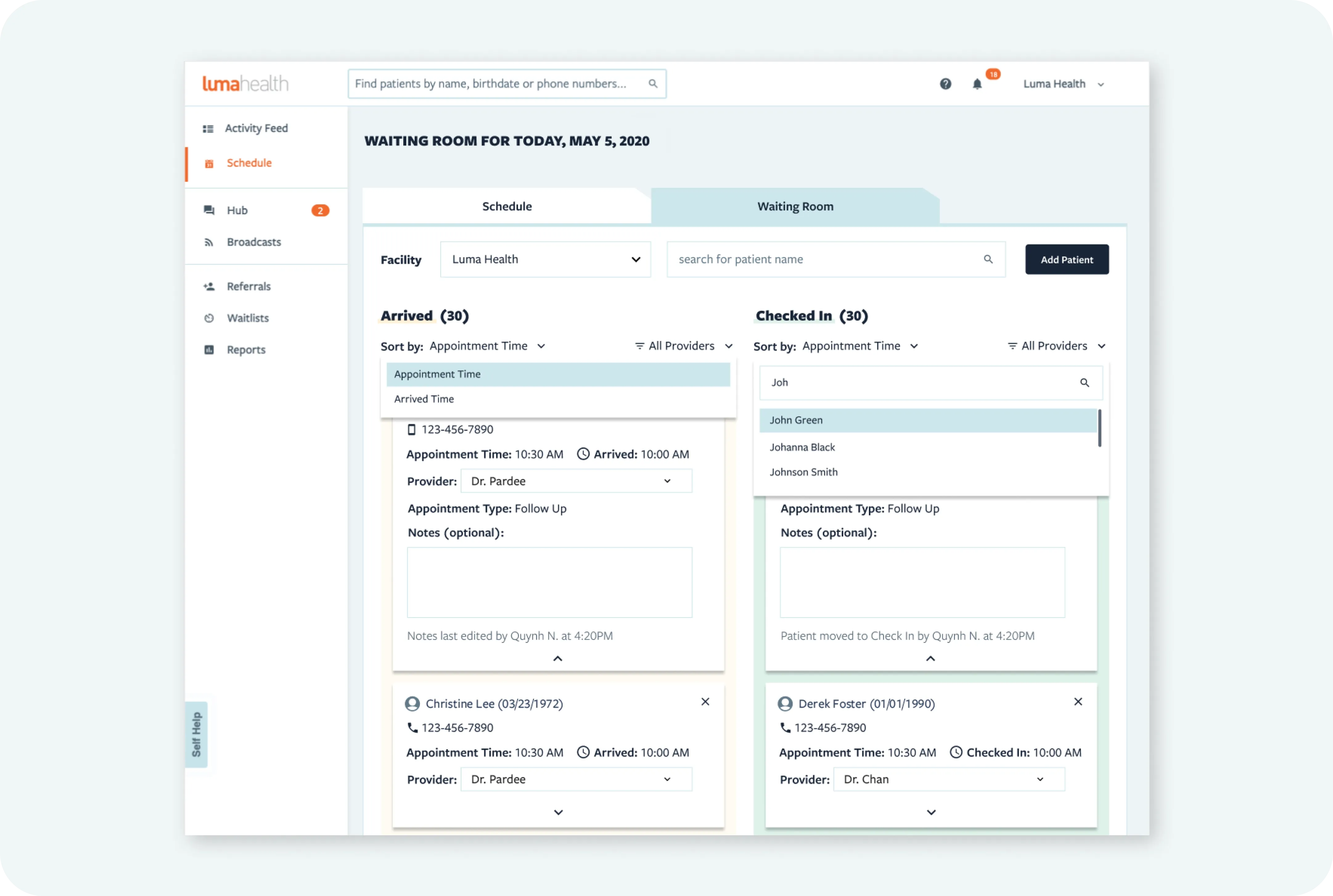
Luma Health is a patient engagement solution ideal for larger healthcare organizations. It uses AI-driven scheduling, automated reminders, digital intake processes, and comprehensive analytics, effectively reducing cancellations and enhancing patient experience at scale.
Best for: Larger healthcare organizations seeking advanced automation.
Key Features:
| Pros: | Cons: |
|---|---|
| Robust automation | Complex setup |
| Effective patient communication | Suited primarily for larger practices |
Pricing: Custom quotes, typically $200/month and up.
REAL Customer Reviews:
Here is what people say about Luma Health.
Constantly have to refresh to view new messages, receiver does not receive any links that are sent ever, when using multiple systems, you do not get any alert to notify you there is a new message so you have to constantly check and refresh. - G2 (source)
Some of the customization options felt limited, especially when trying to tailor messaging for different patient groups. Also, initial onboarding took a bit longer than expected, and some training materials could be improved. - Capterra (source)
Related: Top Luma Health Alternatives for Your Business in 2026
What it does:
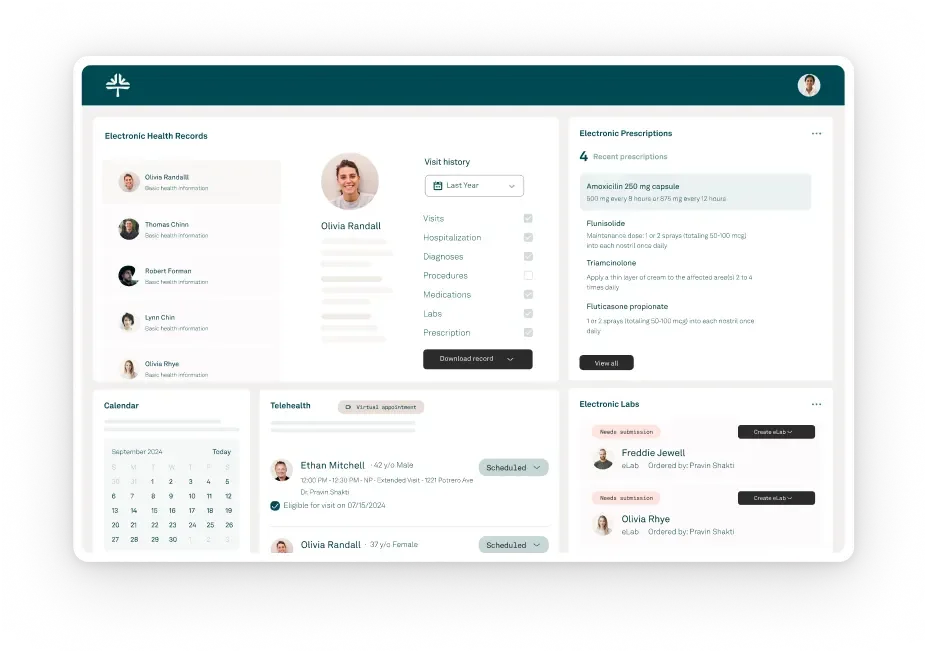
Tebra integrates clinical management, billing solutions, and marketing tools into one robust platform designed for independent clinics. It supports online scheduling, telehealth visits, reputation management, and SEO-driven patient acquisition strategies, making it great for clinics seeking growth.
Best for: Independent practices needing combined clinical and marketing solutions.
Key Features:
| Pros: | Cons: |
|---|---|
| Comprehensive clinical and marketing platform | Higher pricing |
| Robust patient retention tools | Complex onboarding |
Pricing: Around $300–$500/month.
REAL Customer Reviews:
Here is what people say about Tebra.
“I am really overwhelmed with all of the new ideas and products that are introduced on a daily basis! But, I changed companies and I had to learn new software! I AM pleased to say that this was way better than I expected. And it did not take forever to get it either! I also love that there are supporters that meet with me via video chat…live, person to person! And the updates are easy to bear. Whew! This was a load off!” - Alva P. - Clinician/LCSW - G2 (source)
“BUYER BEWARE: NOT FIT FOR SMALL OR LARGE MEDICAL PRACTICES! Over the three years I was with this company, it was bought out twice, each time bringing more instability rather than improvement. Their clearinghouse was so unreliable that I had to resort to conducting billing directly through insurance portals just to get claims processed. Customer support was consistently unhelpful, and there was never any attempt to ask why I was leaving—because the issues are well known, and they simply don’t care to address them. The lack of accountability and functionality made staying unsustainable, and moving on was the best decision.” - Paula B. - PMHNP - Health, Wellness and Fitness - Capterra (source)
Related: Top Terba Alternatives for Your Business in 2026
What it does:
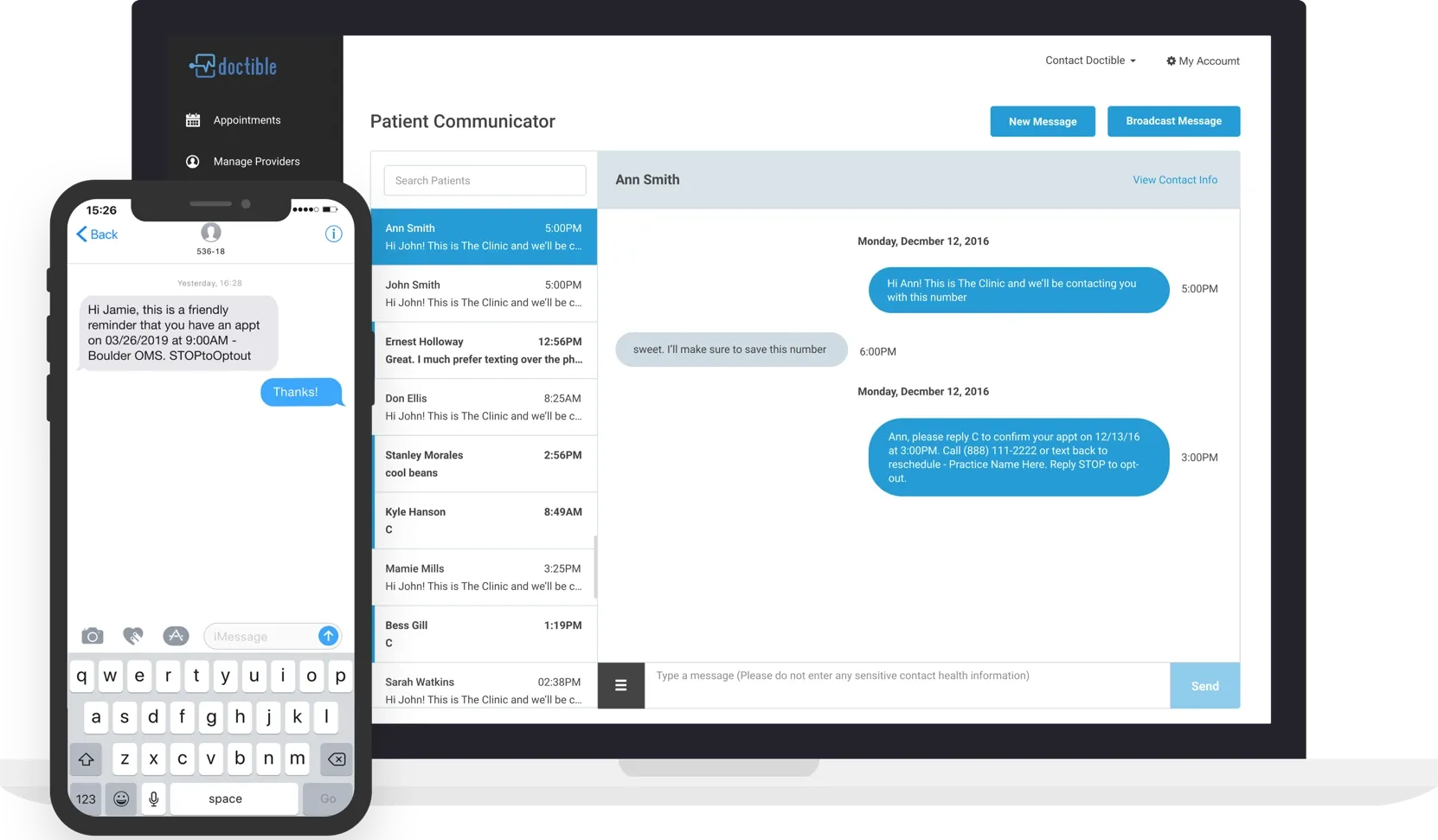
Doctible offers a straightforward, user-friendly patient communication solution perfect for smaller practices. It automates reminders, enables two-way texting, manages online reviews, and offers digital intake forms and scheduling tools that simplify patient interactions.
Best for: Smaller practices looking for easy, affordable patient engagement.
Key Features:
| Pros: | Cons: |
|---|---|
| User-friendly | Limited advanced features |
| Affordable for small practices | Basic reporting |
Pricing: $250–$300/month typically.
REAL Customer Reviews:
Here is what people say about Doctible.
“Don’t sign the contract. Underwhelmed with the entire experience. I would not recommend it.” - Mark M. - chiropractor - Alternative Medicine - Capterra (source)
“Easy to use! Doctible has a very user-friendly platform.” - Andrew D. - Office Manager - G2 (source)
Related: Top Doctible Alternatives for Your Business in 2026
What it does:
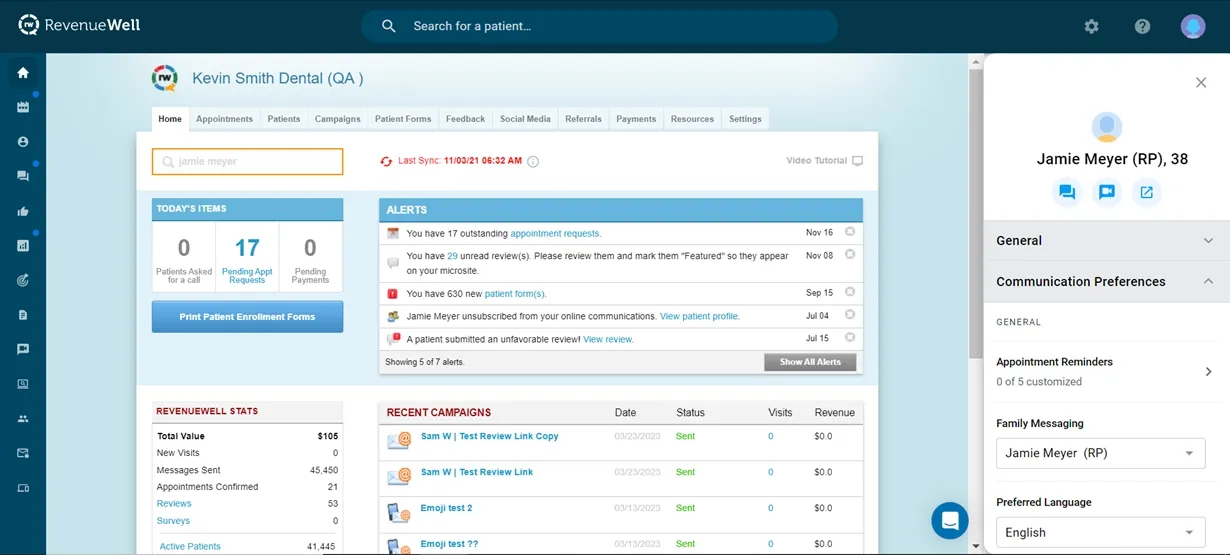
RevenueWell is specifically tailored for dental practices, providing comprehensive tools for patient reminders, reputation management, email marketing, surveys, and social media integration. It aims to enhance patient retention and practice growth through targeted communication strategies.
Best for: Dental practices seeking comprehensive patient communication and marketing tools.
Key Features:
| Pros: | Cons: |
|---|---|
| Specifically tailored for dental practices | Primarily dental-focused |
| Strong marketing and communication capabilities | Limited integration options outside dental EHRs |
| Easy-to-use interface | Higher costs for smaller practices |
Pricing: Typically around $300 - $400/month.
REAL Customer Reviews:
Here is what people say about RevenueWell.
I dislike that when sending a Welcome campaign you do not get an alert if the email is wrong or does not go through. I also dislike how glitchy it can be and there are too many different text types that you have to edit each time you need to edit the reminders. You end up having to update 6 different reminders for each section. I wish that was more customizable. - G2 (source)
Revenuewell is a very dishonest company that only cares for their bottom line. RW does not care if you are successful, they only care for the study stream of income they receive from you. I told them I was having financial problems, their solution was to upsell me to another contract promising me that the “advanced” SEO will pay for itself. It did not. I tried to get out of the contract and they basically said “screw you”. The customer service was terrible, especially with Niko, the person in charge of billing. - Capterra (source)
Related: Top RevenueWell Alternatives for Your Business in 2026
Best For: SMB healthcare practices wanting AI + simplicity
Key Strengths: Unified inbox (SMS / Google / Facebook / Instagram / Web Chat / Email), AI follow-ups, reviews, scheduling, payments, analytics
Notable Limitations: Expanding more advanced EHR integrations
EHR Integration Depth: Basic → Expanding
Telehealth: No
Payments/Text-to-Pay: Yes
Review Generation: Excellent
Unified Inbox: Yes
Starts at $59/mo
Best For: Mid–large practices needing broad outreach
Key Strengths: Multi‑channel reminders, two‑way texting, digital intake, campaigns, telehealth
Notable Limitations: Complex pricing, dated UI, slower support for some
EHR Integration Depth: Moderate
Telehealth: Yes
Payments/Text-to-Pay: Limited
Review Generation: Strong
Unified Inbox: Partial (SMS/Email)
Starts at ~$300+/mo
Best For: Clinics that want phones + messaging in one
Key Strengths: VoIP + SMS, missed‑call text, forms, reminders, payments, call analytics
Notable Limitations: Premium price; occasional call quality issues; some add‑ons
EHR Integration Depth: Moderate
Telehealth: No
Payments/Text-to-Pay: Yes
Review Generation: Strong
Unified Inbox: Yes
Starts at ~$399/mo
Best For: Reputation‑first growth via texting
Key Strengths: SMS review asks, webchat, text‑to‑pay, unified messaging
Notable Limitations: Higher cost; fewer healthcare‑specific workflows
EHR Integration Depth: Light
Telehealth: No
Payments/Text-to-Pay: Yes
Review Generation: Excellent
Unified Inbox: Yes
Starts at ~$300/mo
Best For: Real‑time scheduling with deep PMS/EHR sync
Key Strengths: Bi‑directional sync, online booking, forms, eligibility, payments
Notable Limitations: ~$350/provider; customization limits; occasional glitches
EHR Integration Depth: Deep
Telehealth: No
Payments/Text-to-Pay: Yes
Review Generation: Strong
Unified Inbox: Partial (SMS/Email)
Starts at ~$350/provider/mo
Best For: Enterprise/specialty groups needing automation
Key Strengths: AI scheduling, recalls, digital intake, broadcast, analytics; major EHRs
Notable Limitations: Learning curve; quote‑only; heavier implementation
EHR Integration Depth: Deep
Telehealth: No
Payments/Text-to-Pay: Yes
Review Generation: Strong
Unified Inbox: Partial (SMS)
Starts at ~$200+/mo (quote)
Best For: Independent clinics needing EHR + billing + marketing
Key Strengths: EHR, billing, scheduling, reviews, websites/SEO, portal
Notable Limitations: Higher price; onboarding complexity; mixed support
EHR Integration Depth: Deep (within stack)
Telehealth: Yes
Payments/Text-to-Pay: Yes
Review Generation: Strong
Unified Inbox: Partial
Starts at ~$300–$500/mo
Best For: Small practices wanting simple automation
Key Strengths: Reminders, two‑way texting, intake, recall, reviews, web widget
Notable Limitations: Fewer integrations; basic reporting; fewer AI features
EHR Integration Depth: Light–Moderate
Telehealth: No
Payments/Text-to-Pay: Limited
Review Generation: Strong
Unified Inbox: Partial
Starts at ~$250–$300/mo
Best For: Dental practices
Key Strengths: Dental‑specific recalls, reviews, email marketing, social, portal
Notable Limitations: Dental‑focused; limited outside dental EHRs; higher cost
EHR Integration Depth: Moderate (Dental)
Telehealth: No
Payments/Text-to-Pay: Limited
Review Generation: Strong
Unified Inbox: Partial
Starts at ~$300–$400/mo
Choosing the right Demandforce alternative depends on your practice’s specific needs, size, budget, and goals. If you are a small to mid-sized practice looking for an affordable, AI-driven platform with comprehensive patient engagement tools, DemandHub is your best bet.
Larger practices seeking extensive patient communication and educational resources might find Solutionreach or Luma Health more suitable. Practices that prefer a combined communication system with VoIP phones would benefit from Weave, while those prioritizing reputation management should consider Podium or RevenueWell. Carefully evaluate your requirements, consider integrations, pricing transparency, ease of use, and customer support to make the best decision.
Here are some steps that can help you switch:
Start by booking a personalized demo with DemandHub. Their experts will guide you through the platform, highlighting key differences and benefits tailored specifically to your practice.
After you decide to switch, the onboarding specialists will create a tailored transition plan. This includes setting up your communication channels, online scheduling, review management, payment tools, and training your team to ensure a smooth transition.
The support team will assist in securely transferring your essential patient data, ensuring no critical information is lost. They will integrate your practice management software and guide you through any necessary setups.
The intuitive design allows your staff to learn quickly, typically within hours. You’ll receive continuous support, along with helpful resources to ensure your team is confident and comfortable.
Once set up, you will be able to immediately start streamlining patient interactions, boosting your online reputation, and enjoying DemandHub’s powerful automation features. Ongoing support ensures your practice continues to thrive post-transition.
Ready to make the switch? Book your free DemandHub demo today.
If you are looking for Demandforce alternatives that can boost your healthcare practice’s efficiency, patient interactions, and online presence? You are not alone. Many healthcare providers are turning away from Demandforce due to concerns about high pricing, limited customization, outdated interfaces, or inconsistent support.
And reputation is a big reason. Rater8’s research found that 84% of patients check online reviews before choosing a new provider.
In this guide, I will share the top 9 Demandforce alternatives in 2026. Each platform is carefully selected based on features, pricing transparency, ease of use, real customer reviews, and the overall value they bring to healthcare practices.
Demandforce is a popular patient engagement software used by dental, optometry, veterinary, and wellness clinics. It provides automated appointment reminders, patient communications, review management, surveys, and basic marketing.
To give you a clear and honest picture, I have gathered these pros and cons based on real user feedback from G2, Capterra, Trustpilot, and GetApp.
| Pros: | Cons: |
|---|---|
| Reduces missed appointments effectively | Pricing can be unclear and expensive |
| Simplifies online reputation management | Limited customization and flexibility |
| Easy for basic marketing tasks | Outdated user interface |
| Inconsistent customer support |
After reading lots of reviews on G2, Capterra, Trustpilot, and other platforms, a few patterns stood out. Like any software, Demandforce has its strengths but it also comes with trade-offs that may not work for every practice. Here is what people are saying:
Note: All the reviews are from 2026.
For the price, the review request is all we used it for. So we were essentially paying $200 for an automated Request for Review email. - Capterra (source)
Demandforce integrated with my POS perfectly. Its ability to schedule, remind, and have 2-way communication was awesome. - Capterra (source)
I do not recommend Demandforce. The onboarding process is terrible, so I suggest you avoid it. They require a one-year contract and start charging you from the day you sign up. Onboarding takes two months, during which you only have 60 days to cancel. You won’t know how this service will work for you until after that period. Additionally, they rarely answer their phone calls. - Trustpilot (source)
Demandforce would often text our clients the wrong times for confirmation messages. For example if the client was receiving a haircut booked at 1pm followed by a conditioning treatment booked at 2pm (but all on the same ticket), it would text them with a confirmation of the time the treatment was starting at 2pm, not the time the whole appointment started at 1pm. Clients were getting confused and upset by this and would call daily to complain. We called both Daysmart and Demandforce for a fix for this and we were told nothing was wrong and the system was functioning perfectly. - G2 (source)
Horrible. There is nothing about this company or platform that I would recommend to anyone. - Capterra (source)
Practices often consider switching due to:
Let’s now explore the top 9 Demandforce alternatives for patient acquisition and practice growth.
Here is a detailed breakdown of the best Demandforce alternatives to help you choose the right platform for your practice.
What it does:
DemandHub is an AI-Powered patient engagement platform designed for small to mid-sized practices. It unifies communication channels into a single inbox and leverages AI to automate tasks like appointment reminders, reviews, payments, and lead management, significantly reducing administrative burdens.
Best for: Small to mid-sized practices focusing on AI-powered patient engagement.
Key Features:
| Pros: | Cons: |
|---|---|
| Affordable and transparent pricing starting at $59/month | Still growing EHR integration list (but expanding fast) |
| AI tools reduce administrative workload significantly | Best suited for small to mid-sized practices |
| Easy setup and intuitive interface | |
| Excellent customer support | |
| Trusted by top brands like Kia, GM, and Cadillac | |
| Great reputation management features |
REAL Customer Reviews:
Here is what people say about DemandHub.
Their customer service is top notch! I have also really enjoyed the ease of communicating with our clients and I have found the service to be a real value add for our team and customers. - Capterra (source)
Demandhub provides a single point of contact for reaching out users across multiple channels such as Email, Sms, Whatsapp, social media etc. One feature which stands out is asking users to rate our services on google platforms. This has helped us in improving our ratings. - Gartner (source)
What it does:
Solutionreach is a cloud-based patient relationship management tool that focuses on enhancing patient communication at every stage of care. It automates routine outreach, including appointment reminders, surveys, telehealth sessions, and educational campaigns, helping practices minimize no-shows and boost patient retention.
Best for: Mid to large-sized practices requiring comprehensive patient communication.
Key Features:
| Pros: | Cons: |
|---|---|
| Extensive patient engagement capabilities | Complex pricing |
| Robust integrations | Dated interface |
| Slow customer support |
Pricing: Starts around $300/month (customized quotes).
REAL Customer Reviews:
Here is what people say about Solutionreach.
They used to be better. They used to have good support, they used to have a reliable platform, they used to be a more personable company. - G2 (source)
Customer service is terrible. If you have problems don’t expect a quick resolution. My team has had several issues and were unable to resolve them. I called and had a similar experience. I spoke with what I thought was an upper level manager to help us. Unfortunately, [sensitive content hidden] multiple times promised to help us and get back to us the same day and he failed to do so. - Capterra (source)
Related: Top Demandforce Alternatives for Your Business in 2026
What it does:
Weave combines communication tools and VoIP phone services into one seamless platform, streamlining patient interactions. It offers texting, call management, automated reminders, digital forms, and payments, ideal for practices wanting a unified communication experience.
Best for: Clinics needing integrated communication and phone solutions.
Key Features:
| Pros: | Cons: |
|---|---|
| All-in-one communication system | Higher pricing |
| Simple payment processes | Occasional call quality issues |
Pricing: Around $399/month.
REAL Customer Reviews:
Here is what people say about Weave.
We ran into some limitations that impacted our daily operations. The pricing felt a bit high compared to what we were getting, especially as our practice grew and needed more robust features. We also experienced occasional technical glitches and delays in customer support response, which became frustrating during busy times. - Capterra (source)
Related: Top Weave Alternatives for Your Business in 2026
What it does:
Podium excels in reputation management and patient communication, focusing heavily on collecting and managing online reviews. It provides powerful tools for unified texting, web chat, patient payments, and feedback management, making it a robust choice for practices aiming to strengthen their online presence.
Best for: Reputation management and SMS communications.
Key Features:
| Pros: | Cons: |
|---|---|
| Strong reputation management | Expensive for smaller clinics |
| Easy-to-use interface | Limited healthcare-specific customizations |
Pricing: Typically around $300/month.
REAL Customer Reviews:
Here is what people say about Podium.
Majority of the platform for phone support and management, lack of crucial voicemail controls and reasonable features a less developed phone system would have. - G2 (source)
These guys are super manipulative and their system has had so many issues since I have been with them. My account manager “befriended” me and basically manipulated me via encouragement into opening a second account, now that business idea did not eventuate but they locked me in for another 12 months, after my account manager glossed over my request to stop the second subscription. Do not use them, they promise the world and will do anything to take your money! - Capterra (source)
You can also read my detailed guide that I have written on Podium alternatives. In this guide, I have compared Podium with other tools.
Related: Top Podium Alternatives for Your Business in 2026
What it does:
NexHealth is known for its deep integration with electronic health records (EHR) systems. It provides real-time syncing, online scheduling, digital intake forms, insurance verification, and automated patient messaging, tailored to streamline practice workflows efficiently.
Best for: Deep EHR system integrations.
Key Features:
| Pros: | Cons: |
|---|---|
| Excellent EHR integration | High monthly pricing (around $350/provider) |
| Patient-friendly tools | Limited customization |
Pricing: About $350/provider/month.
REAL Customer Reviews:
Here is what people say about NexHealth.
We have used Nexhealth for the past year. When it works, it works well. However, the service is down for several weeks every two months. This is frustrating, and customer service is very slow to fix the issue. - Trustpilot (source)
issues with syncing from ipad quite often, I know this always tells us if they are having an issue so that helps that we do not need to call customer service. - Capterra (source)
Related: Top NexHealth Alternatives for Your Business in 2026
What it does:
Luma Health is a patient engagement solution ideal for larger healthcare organizations. It uses AI-driven scheduling, automated reminders, digital intake processes, and comprehensive analytics, effectively reducing cancellations and enhancing patient experience at scale.
Best for: Larger healthcare organizations seeking advanced automation.
Key Features:
| Pros: | Cons: |
|---|---|
| Robust automation | Complex setup |
| Effective patient communication | Suited primarily for larger practices |
Pricing: Custom quotes, typically $200/month and up.
REAL Customer Reviews:
Here is what people say about Luma Health.
Constantly have to refresh to view new messages, receiver does not receive any links that are sent ever, when using multiple systems, you do not get any alert to notify you there is a new message so you have to constantly check and refresh. - G2 (source)
Some of the customization options felt limited, especially when trying to tailor messaging for different patient groups. Also, initial onboarding took a bit longer than expected, and some training materials could be improved. - Capterra (source)
Related: Top Luma Health Alternatives for Your Business in 2026
What it does:
Tebra integrates clinical management, billing solutions, and marketing tools into one robust platform designed for independent clinics. It supports online scheduling, telehealth visits, reputation management, and SEO-driven patient acquisition strategies, making it great for clinics seeking growth.
Best for: Independent practices needing combined clinical and marketing solutions.
Key Features:
| Pros: | Cons: |
|---|---|
| Comprehensive clinical and marketing platform | Higher pricing |
| Robust patient retention tools | Complex onboarding |
Pricing: Around $300–$500/month.
REAL Customer Reviews:
Here is what people say about Tebra.
“I am really overwhelmed with all of the new ideas and products that are introduced on a daily basis! But, I changed companies and I had to learn new software! I AM pleased to say that this was way better than I expected. And it did not take forever to get it either! I also love that there are supporters that meet with me via video chat…live, person to person! And the updates are easy to bear. Whew! This was a load off!” - Alva P. - Clinician/LCSW - G2 (source)
“BUYER BEWARE: NOT FIT FOR SMALL OR LARGE MEDICAL PRACTICES! Over the three years I was with this company, it was bought out twice, each time bringing more instability rather than improvement. Their clearinghouse was so unreliable that I had to resort to conducting billing directly through insurance portals just to get claims processed. Customer support was consistently unhelpful, and there was never any attempt to ask why I was leaving—because the issues are well known, and they simply don’t care to address them. The lack of accountability and functionality made staying unsustainable, and moving on was the best decision.” - Paula B. - PMHNP - Health, Wellness and Fitness - Capterra (source)
Related: Top Terba Alternatives for Your Business in 2026
What it does:
Doctible offers a straightforward, user-friendly patient communication solution perfect for smaller practices. It automates reminders, enables two-way texting, manages online reviews, and offers digital intake forms and scheduling tools that simplify patient interactions.
Best for: Smaller practices looking for easy, affordable patient engagement.
Key Features:
| Pros: | Cons: |
|---|---|
| User-friendly | Limited advanced features |
| Affordable for small practices | Basic reporting |
Pricing: $250–$300/month typically.
REAL Customer Reviews:
Here is what people say about Doctible.
“Don’t sign the contract. Underwhelmed with the entire experience. I would not recommend it.” - Mark M. - chiropractor - Alternative Medicine - Capterra (source)
“Easy to use! Doctible has a very user-friendly platform.” - Andrew D. - Office Manager - G2 (source)
Related: Top Doctible Alternatives for Your Business in 2026
What it does:
RevenueWell is specifically tailored for dental practices, providing comprehensive tools for patient reminders, reputation management, email marketing, surveys, and social media integration. It aims to enhance patient retention and practice growth through targeted communication strategies.
Best for: Dental practices seeking comprehensive patient communication and marketing tools.
Key Features:
| Pros: | Cons: |
|---|---|
| Specifically tailored for dental practices | Primarily dental-focused |
| Strong marketing and communication capabilities | Limited integration options outside dental EHRs |
| Easy-to-use interface | Higher costs for smaller practices |
Pricing: Typically around $300 - $400/month.
REAL Customer Reviews:
Here is what people say about RevenueWell.
I dislike that when sending a Welcome campaign you do not get an alert if the email is wrong or does not go through. I also dislike how glitchy it can be and there are too many different text types that you have to edit each time you need to edit the reminders. You end up having to update 6 different reminders for each section. I wish that was more customizable. - G2 (source)
Revenuewell is a very dishonest company that only cares for their bottom line. RW does not care if you are successful, they only care for the study stream of income they receive from you. I told them I was having financial problems, their solution was to upsell me to another contract promising me that the “advanced” SEO will pay for itself. It did not. I tried to get out of the contract and they basically said “screw you”. The customer service was terrible, especially with Niko, the person in charge of billing. - Capterra (source)
Related: Top RevenueWell Alternatives for Your Business in 2026
Best For: SMB healthcare practices wanting AI + simplicity
Key Strengths: Unified inbox (SMS / Google / Facebook / Instagram / Web Chat / Email), AI follow-ups, reviews, scheduling, payments, analytics
Notable Limitations: Expanding more advanced EHR integrations
EHR Integration Depth: Basic → Expanding
Telehealth: No
Payments/Text-to-Pay: Yes
Review Generation: Excellent
Unified Inbox: Yes
Starts at $59/mo
Best For: Mid–large practices needing broad outreach
Key Strengths: Multi‑channel reminders, two‑way texting, digital intake, campaigns, telehealth
Notable Limitations: Complex pricing, dated UI, slower support for some
EHR Integration Depth: Moderate
Telehealth: Yes
Payments/Text-to-Pay: Limited
Review Generation: Strong
Unified Inbox: Partial (SMS/Email)
Starts at ~$300+/mo
Best For: Clinics that want phones + messaging in one
Key Strengths: VoIP + SMS, missed‑call text, forms, reminders, payments, call analytics
Notable Limitations: Premium price; occasional call quality issues; some add‑ons
EHR Integration Depth: Moderate
Telehealth: No
Payments/Text-to-Pay: Yes
Review Generation: Strong
Unified Inbox: Yes
Starts at ~$399/mo
Best For: Reputation‑first growth via texting
Key Strengths: SMS review asks, webchat, text‑to‑pay, unified messaging
Notable Limitations: Higher cost; fewer healthcare‑specific workflows
EHR Integration Depth: Light
Telehealth: No
Payments/Text-to-Pay: Yes
Review Generation: Excellent
Unified Inbox: Yes
Starts at ~$300/mo
Best For: Real‑time scheduling with deep PMS/EHR sync
Key Strengths: Bi‑directional sync, online booking, forms, eligibility, payments
Notable Limitations: ~$350/provider; customization limits; occasional glitches
EHR Integration Depth: Deep
Telehealth: No
Payments/Text-to-Pay: Yes
Review Generation: Strong
Unified Inbox: Partial (SMS/Email)
Starts at ~$350/provider/mo
Best For: Enterprise/specialty groups needing automation
Key Strengths: AI scheduling, recalls, digital intake, broadcast, analytics; major EHRs
Notable Limitations: Learning curve; quote‑only; heavier implementation
EHR Integration Depth: Deep
Telehealth: No
Payments/Text-to-Pay: Yes
Review Generation: Strong
Unified Inbox: Partial (SMS)
Starts at ~$200+/mo (quote)
Best For: Independent clinics needing EHR + billing + marketing
Key Strengths: EHR, billing, scheduling, reviews, websites/SEO, portal
Notable Limitations: Higher price; onboarding complexity; mixed support
EHR Integration Depth: Deep (within stack)
Telehealth: Yes
Payments/Text-to-Pay: Yes
Review Generation: Strong
Unified Inbox: Partial
Starts at ~$300–$500/mo
Best For: Small practices wanting simple automation
Key Strengths: Reminders, two‑way texting, intake, recall, reviews, web widget
Notable Limitations: Fewer integrations; basic reporting; fewer AI features
EHR Integration Depth: Light–Moderate
Telehealth: No
Payments/Text-to-Pay: Limited
Review Generation: Strong
Unified Inbox: Partial
Starts at ~$250–$300/mo
Best For: Dental practices
Key Strengths: Dental‑specific recalls, reviews, email marketing, social, portal
Notable Limitations: Dental‑focused; limited outside dental EHRs; higher cost
EHR Integration Depth: Moderate (Dental)
Telehealth: No
Payments/Text-to-Pay: Limited
Review Generation: Strong
Unified Inbox: Partial
Starts at ~$300–$400/mo
Choosing the right Demandforce alternative depends on your practice’s specific needs, size, budget, and goals. If you are a small to mid-sized practice looking for an affordable, AI-driven platform with comprehensive patient engagement tools, DemandHub is your best bet.
Larger practices seeking extensive patient communication and educational resources might find Solutionreach or Luma Health more suitable. Practices that prefer a combined communication system with VoIP phones would benefit from Weave, while those prioritizing reputation management should consider Podium or RevenueWell. Carefully evaluate your requirements, consider integrations, pricing transparency, ease of use, and customer support to make the best decision.
Here are some steps that can help you switch:
Start by booking a personalized demo with DemandHub. Their experts will guide you through the platform, highlighting key differences and benefits tailored specifically to your practice.
After you decide to switch, the onboarding specialists will create a tailored transition plan. This includes setting up your communication channels, online scheduling, review management, payment tools, and training your team to ensure a smooth transition.
The support team will assist in securely transferring your essential patient data, ensuring no critical information is lost. They will integrate your practice management software and guide you through any necessary setups.
The intuitive design allows your staff to learn quickly, typically within hours. You’ll receive continuous support, along with helpful resources to ensure your team is confident and comfortable.
Once set up, you will be able to immediately start streamlining patient interactions, boosting your online reputation, and enjoying DemandHub’s powerful automation features. Ongoing support ensures your practice continues to thrive post-transition.
Ready to make the switch? Book your free DemandHub demo today.