
AI patient intake chatbots are software programs used by healthcare practices to engage with patients, answer frequently asked questions, and help schedule more appointments. Patient intake is an important step in the patient journey, so using a chatbot to help patients navigate a complex healthcare system can increase patient satisfaction levels.
AI chatbots can help transform patient intake across healthcare practices. They allow you to make the intake process much more efficient and patient-friendly.
Front desk staff can save a significant amount of time by using chatbots to collect patient data, verify details, and automate the intake process from start to finish. Chatbots can also reduce the need for paperwork, and repetitive follow-ups because they ensure that patient data is collected efficiently and stored securely.
AI-powered tools such as chatbots have many benefits for healthcare practices. They allow clinics to streamline patient onboarding and improve patient experiences.
AI chatbots make the intake process as seamless and efficient as possible. They allow patients to provide their medical history and personal details through intake forms. They can fill out these forms on their device without having to visit the clinic.
Chatbots can also answer any questions patients may have instantly and guide patients through the process step-by-step.
By using a chatbot for patient intake, practices can eliminate paperwork and manual data entry, which is not only time-consuming but the leading cause of medical errors. Using a chatbot to collect patient information allows practices to free up a significant amount of time. This allows receptionists to focus on providing quality in-person service.
It is crucial that patients provide accurate information to their healthcare providers. However, this is a challenge when collecting patient data manually or through physical forms.
AI chatbots allow patients to ask questions and get instant responses. This helps to reduce miscommunication in the patient intake process.
In some cases, patients may find it easier to talk to a chatbot about their medical history due to the increased sense of privacy. This results in a higher patient satisfaction, as they can easily disclose their medical history, allergies, and personal information.
AI chatbots are valuable resources that allow you to enhance patient communication and streamline day-to-day tasks. Here is a step-by-step guide to help you implement AI chatbots effectively.
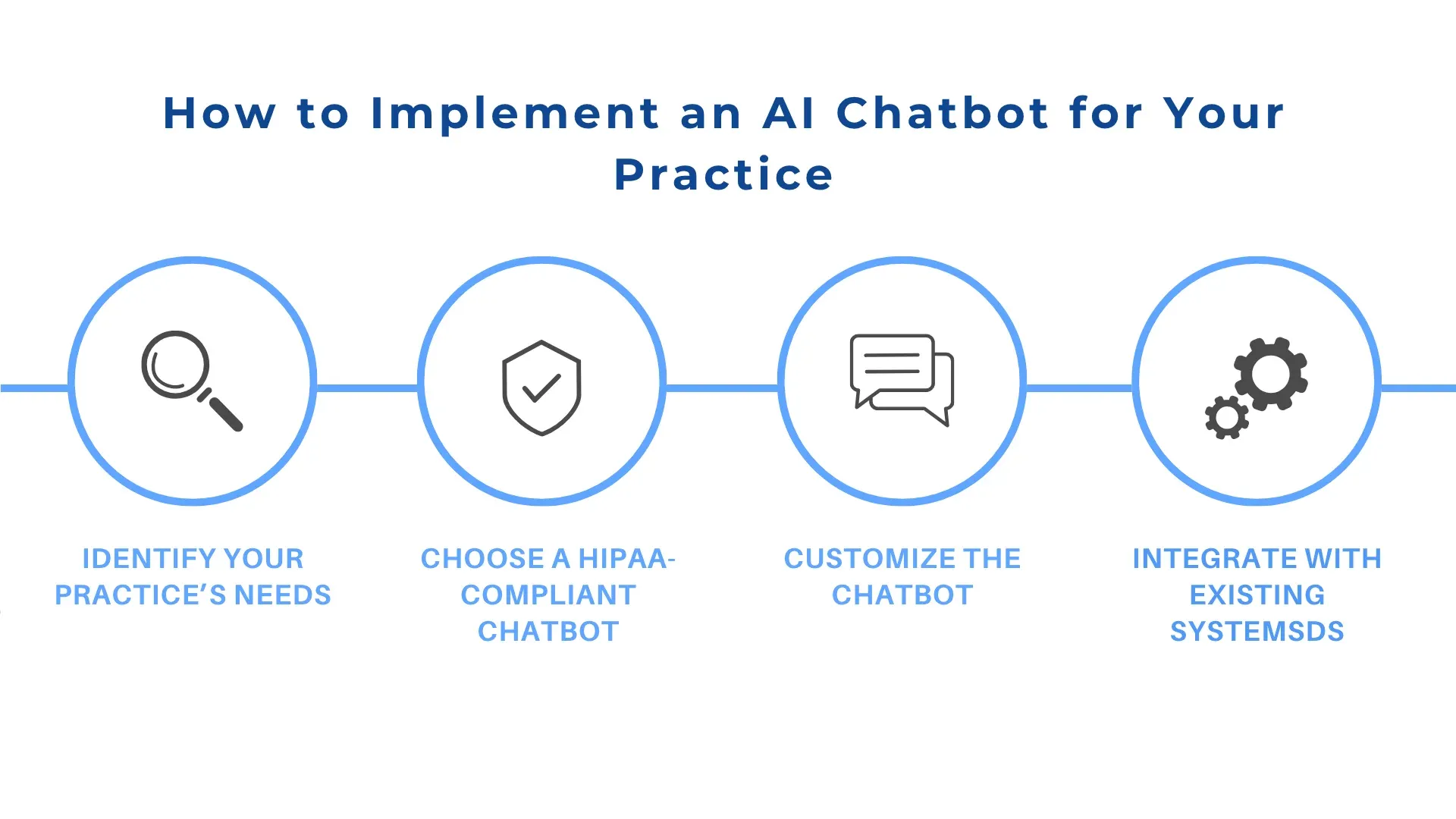
AI chatbots can be programmed to meet your practice’s specific needs. It is important that you take the time to outline what you want the chatbot to accomplish.
Most clinics use AI chatbots to prioritize lead capturing, schedule appointments and automate patient intake.
A chatbot used to collect and store patient data has to meet HIPAA compliance guidelines. This is why it is best to choose a chatbot provider that offers robust encryption and secure patient data storage.
Now that you have picked a chatbot provider, it is time to customize it to your brand. This includes the tone, the workflows, and even the branding. You can customize the chatbot to reflect your practice and function as an extension of the customer support team.
You can also configure the chatbot to answer frequently asked questions, and support potential clients in the scheduling and intake process.
Chatbots can be integrated with any existing software, such as EHR, and CRM software. You can also use a comprehensive solution such as DemandHub to streamline patient data flow, schedule appointments, manage your brand’s online reputation, and keep patients engaged 24/7 through a chatbot.
To learn more about DemandHub, book a free demo today.
An AI patient intake chatbot is a program or software designed to manage patient intake by collecting patient information, scheduling appointments, and answering any questions a patient may have to ensure they are prepared for their upcoming appointment.
AI chatbots reduce clinic wait time by giving patients a chance to fill out intake forms in advance. Patients can save time by providing important details through their device. This also ensures that your practice’s front desk staff isn’t overwhelmed by long lines, and patient check-in efficiently for their appointments.
Yes, AI chatbots can be designed especially to meet HIPAA compliance guidelines. This ensures that patient data is shared through a secure medium preventing unauthorised access to Protected Health Information (PHI).
Yes, AI and many modern intake tools can be integrated smoothly with EHR software. We recommend using DemandHub for a seamless integration experience and a responsive customer support team in case you run into issues.
AI chatbots are used across various industries, but they are ideal for service based business and healthcare providers. If you are running a dental clinic, physiotherapy practice, or a car dealership you can use an AI chatbot to streamline intake, appointment scheduling, and other day-to-day tasks.
AI patient intake chatbots are software programs used by healthcare practices to engage with patients, answer frequently asked questions, and help schedule more appointments. Patient intake is an important step in the patient journey, so using a chatbot to help patients navigate a complex healthcare system can increase patient satisfaction levels.
AI chatbots can help transform patient intake across healthcare practices. They allow you to make the intake process much more efficient and patient-friendly.
Front desk staff can save a significant amount of time by using chatbots to collect patient data, verify details, and automate the intake process from start to finish. Chatbots can also reduce the need for paperwork, and repetitive follow-ups because they ensure that patient data is collected efficiently and stored securely.
AI-powered tools such as chatbots have many benefits for healthcare practices. They allow clinics to streamline patient onboarding and improve patient experiences.
AI chatbots make the intake process as seamless and efficient as possible. They allow patients to provide their medical history and personal details through intake forms. They can fill out these forms on their device without having to visit the clinic.
Chatbots can also answer any questions patients may have instantly and guide patients through the process step-by-step.
By using a chatbot for patient intake, practices can eliminate paperwork and manual data entry, which is not only time-consuming but the leading cause of medical errors. Using a chatbot to collect patient information allows practices to free up a significant amount of time. This allows receptionists to focus on providing quality in-person service.
It is crucial that patients provide accurate information to their healthcare providers. However, this is a challenge when collecting patient data manually or through physical forms.
AI chatbots allow patients to ask questions and get instant responses. This helps to reduce miscommunication in the patient intake process.
In some cases, patients may find it easier to talk to a chatbot about their medical history due to the increased sense of privacy. This results in a higher patient satisfaction, as they can easily disclose their medical history, allergies, and personal information.
AI chatbots are valuable resources that allow you to enhance patient communication and streamline day-to-day tasks. Here is a step-by-step guide to help you implement AI chatbots effectively.
AI chatbots can be programmed to meet your practice’s specific needs. It is important that you take the time to outline what you want the chatbot to accomplish.
Most clinics use AI chatbots to prioritize lead capturing, schedule appointments and automate patient intake.
A chatbot used to collect and store patient data has to meet HIPAA compliance guidelines. This is why it is best to choose a chatbot provider that offers robust encryption and secure patient data storage.
Now that you have picked a chatbot provider, it is time to customize it to your brand. This includes the tone, the workflows, and even the branding. You can customize the chatbot to reflect your practice and function as an extension of the customer support team.
You can also configure the chatbot to answer frequently asked questions, and support potential clients in the scheduling and intake process.
Chatbots can be integrated with any existing software, such as EHR, and CRM software. You can also use a comprehensive solution such as DemandHub to streamline patient data flow, schedule appointments, manage your brand’s online reputation, and keep patients engaged 24/7 through a chatbot.
To learn more about DemandHub, book a free demo today.
An AI patient intake chatbot is a program or software designed to manage patient intake by collecting patient information, scheduling appointments, and answering any questions a patient may have to ensure they are prepared for their upcoming appointment.
AI chatbots reduce clinic wait time by giving patients a chance to fill out intake forms in advance. Patients can save time by providing important details through their device. This also ensures that your practice’s front desk staff isn’t overwhelmed by long lines, and patient check-in efficiently for their appointments.
Yes, AI chatbots can be designed especially to meet HIPAA compliance guidelines. This ensures that patient data is shared through a secure medium preventing unauthorised access to Protected Health Information (PHI).
Yes, AI and many modern intake tools can be integrated smoothly with EHR software. We recommend using DemandHub for a seamless integration experience and a responsive customer support team in case you run into issues.
AI chatbots are used across various industries, but they are ideal for service based business and healthcare providers. If you are running a dental clinic, physiotherapy practice, or a car dealership you can use an AI chatbot to streamline intake, appointment scheduling, and other day-to-day tasks.